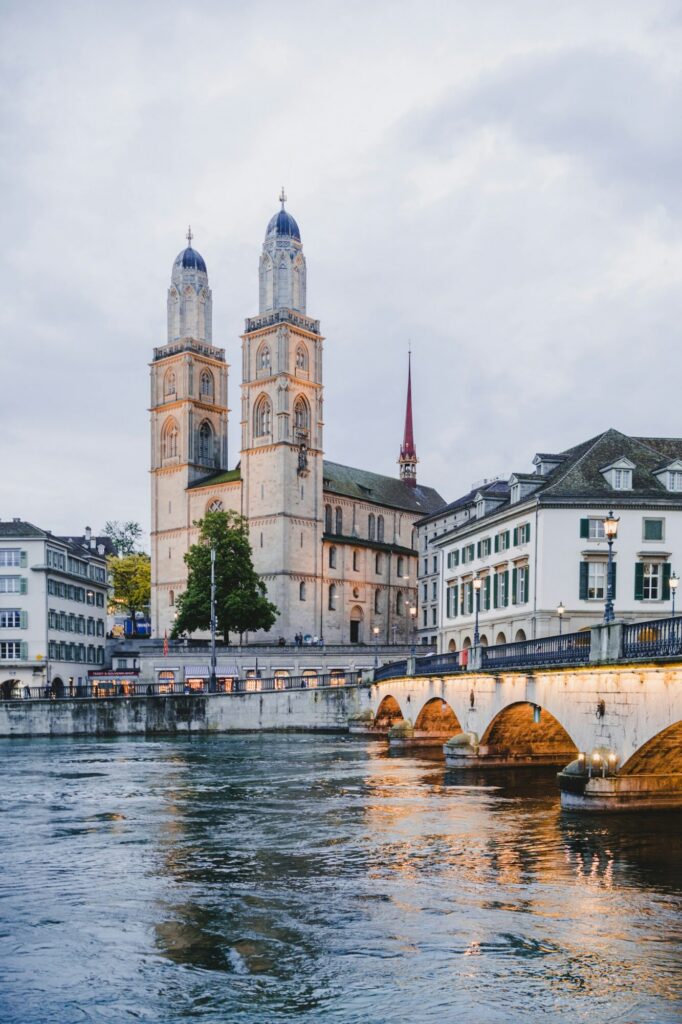
Geneva Watch Days returns from 2 to 6 September 2026 with 71 maisons and one city used as the exhibition floor.
The central Pavilion remains the most visible public anchor, but the event extends into brand showrooms, hotels, temporary presentation spaces and private collector appointments across the city. The result is less controlled than a single-hall trade fair and potentially more useful for visitors who understand the difference between public access and scheduled access.
That difference is particularly important in 2026. Geneva Watch Days is publishing a substantial programme of public exhibitions and discussions, while retaining an invitation layer for product handling, collectors, retailers and evening events.
Geneva Watch Days 2026 dates and scale
The 2026 edition runs from Wednesday 2 September to Sunday 6 September. Five days, and the last one matters more than most visitors expect.
The organiser currently lists 71 maisons. The group combines established Swiss names, independent watchmakers, younger studios and brands whose commercial scale differs considerably from one another.
Names identified in the 2026 line-up include Breitling, Bvlgari, De Bethune, Girard-Perregaux, Greubel Forsey, Laurent Ferrier, MB&F, MING and Zenith. The value of the week does not depend on every visitor being interested in every house. Its strength lies in placing very different forms of contemporary watchmaking within one city and one concentrated calendar.
Compared with a convention-centre model, Geneva Watch Days requires more selection. Visitors should decide which brands justify a formal appointment, which can be understood through the public spaces and which presentations are relevant only to a specific collecting or retail interest.
What is open to the public
The official Pavilion opens to the public at 2pm on Wednesday 2 September. It is then scheduled to open from 10am to 5.30pm on Thursday, Friday and Saturday, and from 10am to 4pm on Sunday.
The public programme includes watch exhibitions, reviews, demonstrations, panel discussions and the CaliberShip Challenge, in which participants work on the regulation of mechanical movements with support from students at the Geneva Watchmaking School.
Several of the week’s most relevant discussions are also public. The 2026 agenda includes sessions on the state of Swiss watchmaking, product desirability, artificial intelligence’s influence on watch recommendations, the relationship between watchmakers and movement constructors, and the continuing value of human expertise.
This gives Geneva Watch Days a useful second function. A visitor can inspect new watches, but also listen to the industry examine how value is created, transmitted and increasingly mediated by algorithms.
What still requires an invitation
Public is not the same as open.
The Collectors’ Lounge, selected Touch & Feel sessions, the official inauguration, executive breakfasts, auction activity and several evening events are invitation-only. Brand showrooms often run on appointment even while the Pavilion is open to anyone, which is why two visitors can attend the same week and see completely different watches.
For collectors, retailers and private clients, this is the layer that should be organised first. Handling a technically complex or limited-production watch in a quiet appointment is different from viewing it in an open exhibition. The brand team may also need to know the visitor’s collecting interests, market or commercial role before confirming time.
It is therefore better to describe Geneva Watch Days as publicly accessible but appointment-sensitive. The public Pavilion provides a credible entry point. The deeper commercial and collector experience depends on preparation and relationships.
The four-part geography of the event
The organiser presents the week through several connected spaces: the principal Pavilion, the Blue Box, participating maisons’ locations around Geneva and the Collectors’ Lounge.
The Pavilion contains public exhibitions, talks and selected evening activity. The Blue Box is built around guided watchmaking sessions in which visitors handle the work themselves. Brands then use their own showrooms, hotel suites or temporary spaces for individual presentations.
The citywide format changes the rhythm of the visit. A conventional fair encourages visitors to move aisle by aisle. Geneva Watch Days asks them to move by appointment, neighbourhood and priority.
That can produce better conversations because houses are not forced into identical stands. It can also create a weak itinerary if meetings are accepted without considering distance and travel time.
Why the artificial-intelligence discussion matters
One of the most timely public sessions asks what happens when artificial intelligence answers a prospective buyer’s question about which watch to purchase.
The question is not technical. It is about who now decides what is desirable.
Traditional watch demand has been shaped by retailers, specialist journalists, auction results, collectors, brand ambassadors and personal recommendation. Search engines and social platforms added new layers. Generative systems can now compress those signals into a single confident answer, even when the underlying market is fragmented or the recommendation lacks context.
For established brands this is a visibility problem. For an independent watchmaker it is closer to an existence problem: a maison can produce original work, keep serious collectors close, and still be almost invisible in the datasets and publications that feed automated recommendations. De Bethune and Laurent Ferrier do not need an algorithm to know what they are worth. A first-time buyer asking a chatbot might.
Geneva Watch Days is well placed to discuss that tension because its identity depends on plurality. The event is most valuable when it exposes collectors to watches they did not arrive intending to see.
How collectors should plan Geneva Watch Days
Build the week in two layers.
Layer one: confirmed appointments
Begin with maisons whose work requires direct handling or a detailed technical presentation. Confirm the location, expected duration and whether the meeting is private, press-facing, retail-facing or collector-facing.
Do not stack meetings because they look close on a map. Presentations run long, and the useful part of the conversation usually starts after the formal explanation ends.
Layer two: public programme
Use the Pavilion and Blue Box to fill the spaces between appointments. Select panels in advance rather than treating the programme as ambient entertainment.
A collector interested in market behaviour may prioritise discussions about desirability, the secondary market and algorithmic influence. A technically focused visitor may prefer movement construction, regulation or watchmaking education.
Sunday can be especially useful for visitors less interested in evening hospitality. The public Pavilion remains open until 4pm and the programme includes family and educational elements as well as a closing symposium.
Geneva Watch Days and Watches and Wonders serve different purposes
Geneva no longer has one watch week. It has several, and they do different jobs.
Watches and Wonders Geneva delivers concentrated global scale, major-group power and an extensive institutional structure. Geneva Watch Days is more dispersed, more varied in physical presentation and closely associated with independent watchmaking.
Collectors do not have to choose. The two formats show different parts of the same industry.
Watches and Wonders shows how global watchmaking presents itself at maximum scale. Geneva Watch Days shows how a city, a showroom and a direct conversation can still influence which objects gain attention.
Luxury.it perspective
Geneva Watch Days is strongest when it refuses to imitate a bigger fair.
Its 71-maison scale is now substantial, but the event’s advantage remains the possibility of moving between major brands, independent watchmakers, public debate and private handling without forcing every encounter into the same commercial architecture.
The correct luxury itinerary is selective. Secure the appointments that matter, leave space for discovery and use the public programme to understand the pressures shaping watch demand beyond the display case.
Related guides
Read Watches and Wonders Geneva 2026 · Fashion, Watches and Jewellery
For hotel arrangements, private transfers and appointment support in Geneva, contact Luxury.it Concierge.