A Cartier bracelet set with the 197.80-carat Romanov sapphire sold for CHF 4.1 million in Geneva on 11 November. That is about $4.9 million, more than twice the high estimate of CHF 1.7 million, as reported by Rapaport. It was the top lot of the Royal & Noble Jewels sale at Sotheby’s, which made CHF 15.3 million.
The estimate was CHF 850,000 to CHF 1.7 million. The price was CHF 4.1 million.
The stone: 197.80 carats from the Russian crown jewels
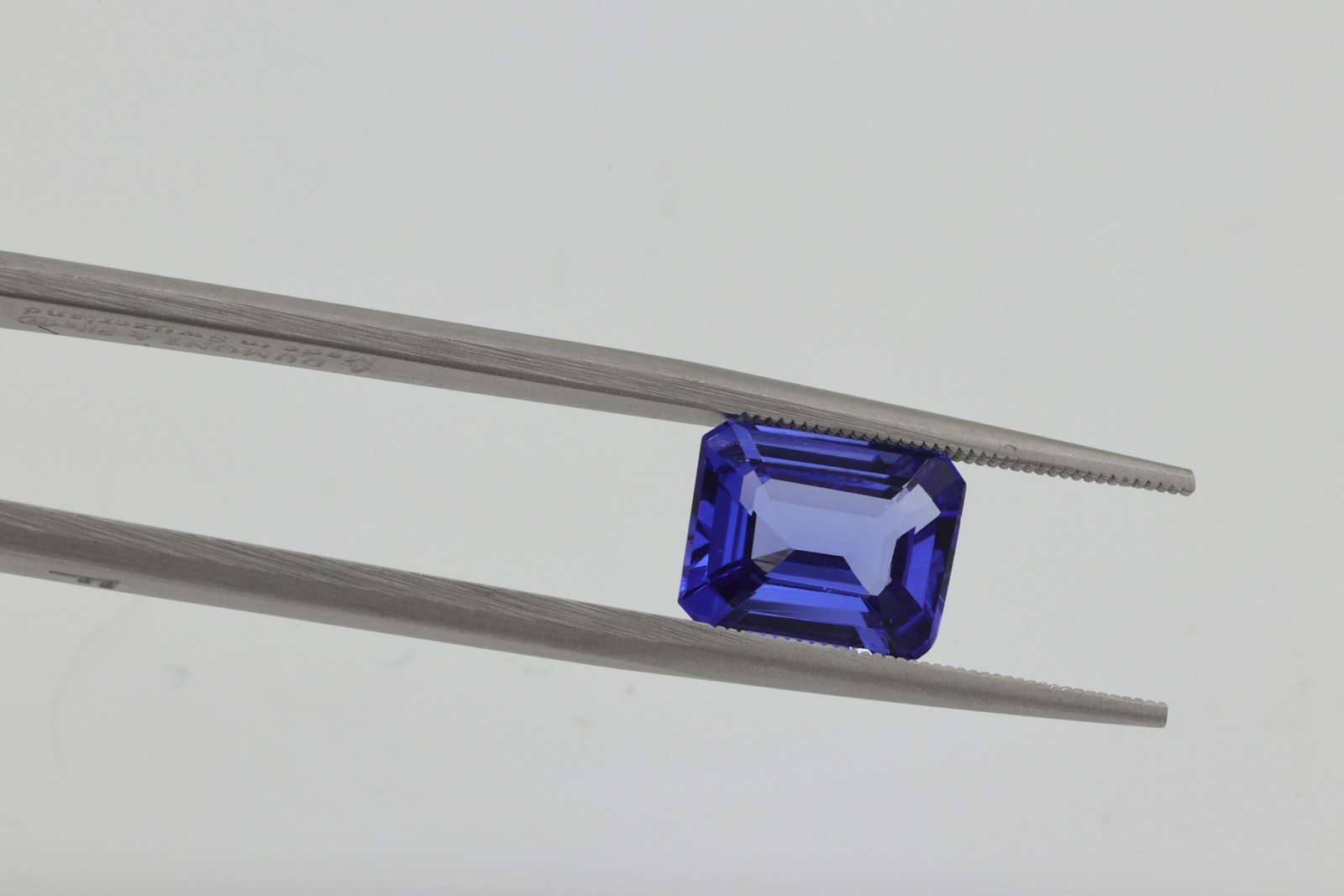
The sapphire is a cushion-shaped Ceylon stone of 197.80 carats with no heat treatment, according to the SSEF and Gübelin reports cited in Sotheby’s catalogue entry. Nobody recorded when it entered the Russian crown jewels. Its faceting points to a Mughal origin, the catalogue says. In the inventory of the crown jewels published in the 1920s it sits in a diamond border by Fabergé, one of a pair of clasps with a second sapphire of 249.25 carats. Empress Maria Feodorovna is reported to have worn the pair on her skirt at a ball in 1883.
From the Soviet sales to Ganna Walska
The Soviet government sold that part of the collection anonymously. By 1927 the sapphire was with Cartier, which sold it, as the pendant of a long necklace, to Ganna Walska, the Polish-born opera singer and one of the great jewellery collectors of her time. Two years later she had it remounted with a carved Mughal emerald of 256.60 carats. Sotheby’s has sold the stone twice before. The first time was in New York in April 1971, with the rest of Walska’s collection. The second was in Geneva in November 1992, when it hung from a necklace of emerald and sapphire beads.
The bracelet Cartier made in 2015
The mount is recent. Cartier built the bracelet around the stone in 2015, in brilliant-cut and shield-shaped diamonds, in a geometric style that echoes the Art Deco setting Walska first wore. The centre is interchangeable. An engraved rock crystal panel with triangular diamonds can take the sapphire’s place. The bracelet was shown in Tokyo in 2019, in the Cartier exhibition at the National Art Center.
The rest of the sale: a Devonshire tiara and an 18-fold surprise
The second lot was also by Cartier. A jewel of black opals made in 1937, worn as a necklace or as a tiara, which belonged to Mary Cavendish, Duchess of Devonshire, sold for CHF 1.7 million against a high estimate of CHF 1.1 million. A necklace by Bucherer and Adler with a Ceylon sapphire of 43.07 carats made CHF 1.6 million, more than three times its high estimate. The widest gap came lower down. A Belle Époque brooch of 1910 with a padparadscha sapphire of 23.64 carats, from the collection of Sibylla of Saxe-Coburg and Gotha, carried an estimate of CHF 40,000 to CHF 60,000. It sold for CHF 1.1 million.
Sotheby’s held its High Jewelry sale on the same day. It made CHF 32.6 million, led by an unmounted fancy intense pink diamond of 8.63 carats at CHF 4.5 million, at the upper end of its estimate, as Rapaport also reported. Together the two sales come to CHF 47.9 million.
The Luxury.it perspective
Provenance did the work. The sapphire is large and untreated, and the bracelet is a Cartier of 2015. Neither fact explains a price at more than twice the estimate. What the buyer paid for is the line that runs from the Russian crown jewels through the Soviet sales, Cartier in the 1920s and Ganna Walska. The same logic explains the padparadscha brooch and the opal tiara: named owners, old mounts, conservative estimates. It is the pattern of the whole Geneva week. Christie’s sold the Bulgari Pink inside its estimate on 10 November, as in our report on that sale, and the 8.63-carat pink at Sotheby’s did the same. Great stones made their price. Great stories made several times theirs.
Related guides
The Bulgari Pink before the sale · A blue diamond and a Kashmir sapphire at Phillips · Phillips passes $100 million in watches · The Argyle pinks at Boodles