Mykonos has an attention problem, and it is not a shortage.
The island remains one of the most recognisable summer addresses in the world, but recognition has made it harder to use well. People arrive with images, reservations, expectations, group chats, beach-club names, villa links and a dangerous belief that spending more will automatically make the island easier. It rarely does.
This is why Fouquet’s Mykonos is worth watching.
Barrière opened the hotel on 27 June 2026, marking the group’s first address in Greece and the newest chapter for the Fouquet’s name after Paris, New York, Courchevel and Saint-Barth. The property sits on the southern coast of Mykonos, between Paraga and Paradise Beach, and is presented as a private retreat with 60 rooms and suites plus three villas.
The question is not whether Mykonos needed another five-star hotel. The question is whether this one understands the island’s central problem: how to be close to the energy without being swallowed by it.
The southern coast is not neutral
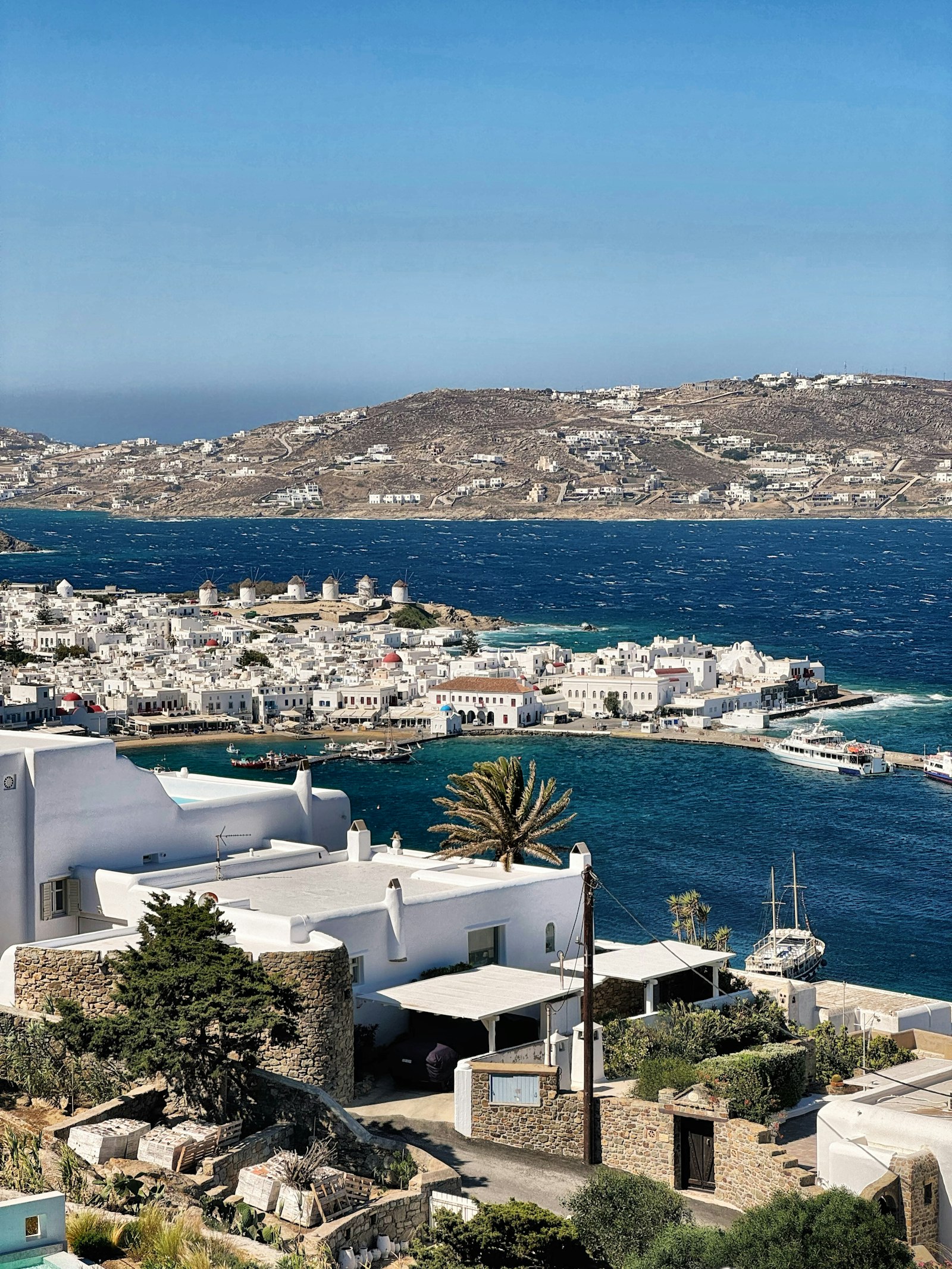
Paraga and Paradise are not quiet names. They belong to the Mykonos most people think they want before they arrive: music, movement, beautiful water, famous beach clubs, long lunches, late nights, a sense that every hour could become something larger than planned.
That can be thrilling. It can also be brutal if the hotel has no private logic of its own. Fouquet’s Mykonos is interesting because it places a French hospitality brand inside a very Greek pressure zone, and its own language, direct beach access, unspoiled coves, private pools, panoramic terraces, a rare position between two iconic bays, is not decorative here. It is defensive.
A good hotel here must protect the guest from the same island it sells.
A strange fit, and maybe a smart one
Fouquet’s carries a Parisian code. It suggests red awnings, polished rooms, a certain French theatricality, a name that belongs to cinema, restaurants, grand hotels and urban ritual. Mykonos is something else: dry stone, wind, white geometry, beach-club economics, villas, dust, sunset light, scooters, queues, and sudden beauty.
On paper, the match could have gone wrong. But the better reading is that Barrière is not trying to make Mykonos French. It is taking the Fouquet’s hospitality language into the places its clients already travel; the group’s own release frames the opening as accompanying clients in their preferred international destinations. That is the modern hotel-brand game. The client no longer meets the brand only in Paris or Courchevel. The brand follows the client into summer.
Suites, villas and the need for control
The accommodation mix is telling. Sixty rooms and suites, three villas, private pools in many categories, sea views, terraces, direct sea access depending on the room type. The largest, Villa Paradiso, is described as a seven-bedroom villa on two levels with a gated entrance and private driveway.
That is not a detail. It is the Mykonos market speaking. Guests want the services of a hotel and the control of a villa. They want privacy without managing staff, to go out without being forced out, to host, disappear, swim, recover and decide late. Mykonos rewards flexibility more than almost any other Mediterranean island: a rigid hotel product can fail even when it is beautiful. A good Mykonos hotel must work at noon, at sunset, at midnight and the morning after a night that went further than planned.
Who should consider it
Fouquet’s Mykonos is not for the traveller who wants the simplest version of Greece. That traveller should go elsewhere: Paros, Antiparos, Patmos, Sifnos, Serifos, Folegandros, or a slower part of Crete may all be better.
This hotel is for someone who has already accepted Mykonos as a high-voltage island and wants a controlled address inside the voltage. Groups who want nightlife without booking chaos as their accommodation strategy. Couples who want a dramatic southern-coast view but not a hotel that behaves like a nightclub with rooms. And the French, American and Middle Eastern guest who understands the Fouquet’s name and wants a familiar standard in an unfamiliar island mood.
What to avoid
Do not book Mykonos because a new hotel has opened. That is a bad reason to choose an island.
Book it only if the island itself suits the trip. Mykonos is expensive, exposed, windy, social and occasionally ridiculous. It can be magnificent if you know what you are buying. It can be a punishment if you want serenity and accidentally book spectacle. The smarter move is to decide the rhythm first. Three nights of energy after a quieter Greek island? Good. A full week of beach clubs and villa dinners? Possible. Rest, culture and calm? Mykonos may not be the answer. A new hotel can improve the trip. It cannot change the island’s nature.
Luxury.it perspective
Fouquet’s Mykonos matters because it reveals where the European summer hotel market is going. Brands are no longer opening only in cities, ski resorts and classic capitals. They are entering the seasonal pressure points where their guests already spend money, time and social capital, a shift Mykonos has been signalling all year, from the Four Seasons arrival onward. The island has enough noise. What it needs are better filters. Fouquet’s will succeed if it becomes one.
Related guides
Luxury Hotels in the Greek Islands · Four Seasons Resort Mykonos · Luxury Openings · Destinations
Building a Greek summer, from Mykonos to the quieter Cyclades? Request access through Luxury.it Concierge.