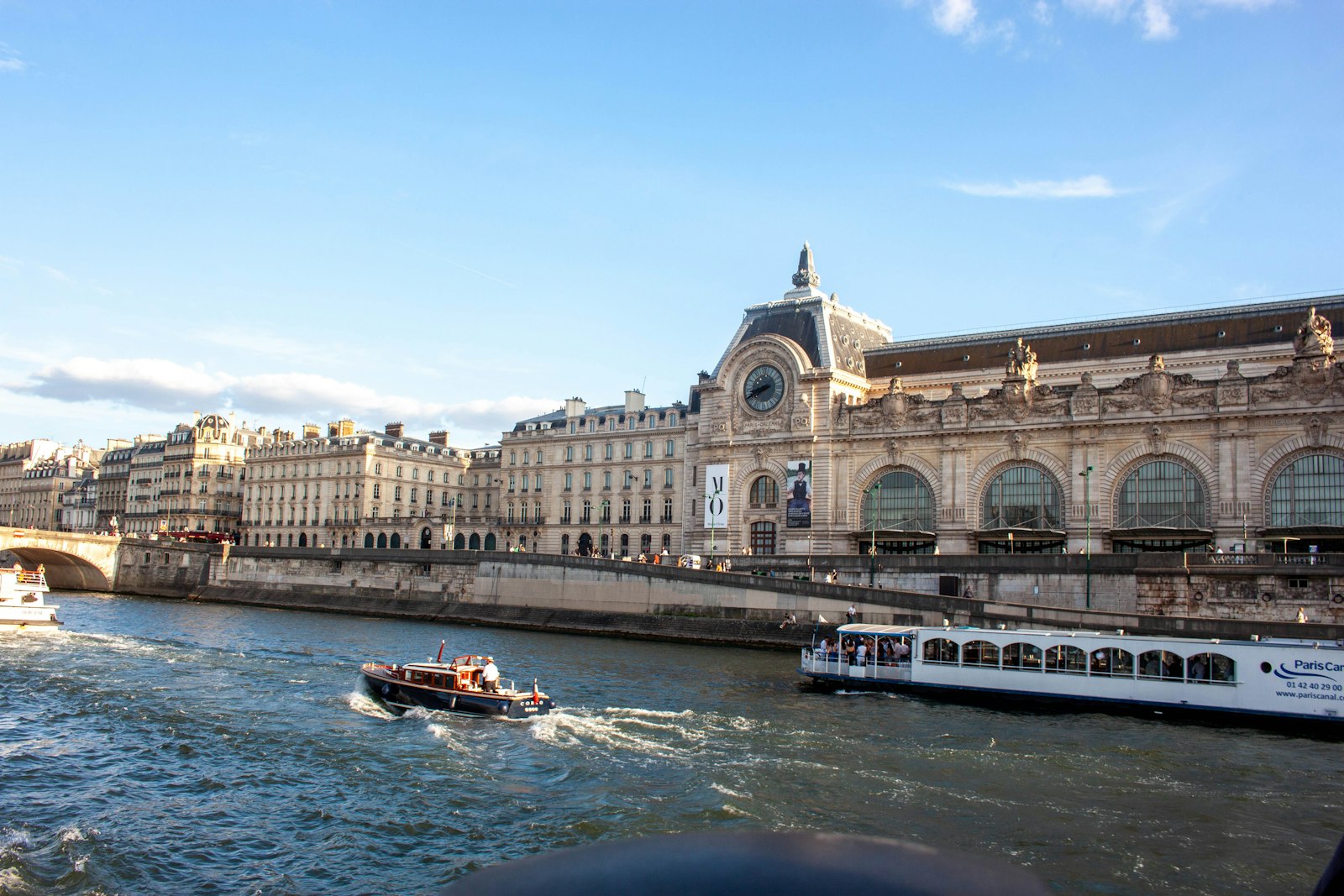
The Musée d’Orsay opens Mary Cassatt: Being Independent on Tuesday 6 October, a century after the painter’s death. Almost 80 paintings, pastels and prints cover her whole career, until 31 January 2027. Among the loans is a little girl in a blue armchair, painted in 1878 and lent by the National Gallery of Art in Washington. The museum calls the show a long-awaited event: France’s national museums, it says, have never devoted a major exhibition to Cassatt, although she lived in France for nearly six decades. After Paris it travels to the National Portrait Gallery in London in March 2027, as Mary Cassatt: Radical Impressionist.
Almost 80 works, from Washington to the Petit Palais
The Orsay promises “rarely shown works from public and private European collections”, alongside “paintings and pastels from American collections seldom exhibited outside the United States”. The press list gives an idea of the range. The Museum of Fine Arts, Boston, lends Le Thé, of about 1880, and Dans la loge, of 1878; Washington sends two paintings, the Philadelphia Museum of Art Femme dans une loge of 1879, LACMA a mother washing her sleepy child, of 1880, and the Metropolitan Museum of Art Lilas à la fenêtre. From French collections come Automne, portrait de Lydia Cassatt, the painter’s sister, from the Petit Palais, and a young woman in a white hat from the Fondation Bemberg in Toulouse. The Orsay adds its own works, among them Jeune fille au jardin and Jeune fille au banjo of 1894, which it bought in 2026. The show is open from Tuesday to Sunday, 9.30 to 18.00, and on Thursdays until 21.45, with timed tickets at 16 euros, 13 reduced and 12 in the evening; under-18s and EEA residents under 26 go free. The curators are Caroline Corbeau-Parsons and Anne Robbins of the Orsay, with Sarah Moulden of the National Portrait Gallery and Erica Hirshler of the Museum of Fine Arts, Boston; details are on the museum’s exhibition page.
Degas’s invitation and four Impressionist shows
Cassatt was born in 1844 in Allegheny City, now part of Pittsburgh, studied at the Pennsylvania Academy of the Fine Arts from 1860 and exhibited at the Paris Salon from 1868. She settled in Paris in 1874. Degas invited her to join the Impressionists as early as 1877, and she showed in four of their eight exhibitions, in 1879, 1880, 1881 and 1886, the only American officially associated with the group, according to the Metropolitan Museum. Durand-Ruel became her dealer in the 1880s. She described herself as “American, American through and through”, and in her own words she was independent, could live alone and loved to work. The 1901 French census recorded her as “American, Householder, Painter, Employer”. The show follows her in thirteen chapters, from her training to an epilogue, through mothers and children, modern women, her work as an adviser and collector and her own commitments, in what the museum calls a chrono-thematic order.
“In France, this will be a long-awaited event: its national museums have never devoted a major exhibition to Mary Cassatt, an active member and pillar of the impressionist group.” Musée d’Orsay, on Mary Cassatt: Being Independent.
Modern Woman, the lost mural of 1893
One room is built around a work that no longer exists. In 1892 Cassatt was commissioned to paint Modern Woman, a mural for the Woman’s Building at the 1893 World’s Fair in Chicago, four metres by eighteen, and she painted it in six months. The Orsay calls it the most important commission she ever received; the mural is now untraced and probably destroyed. The museum evokes it through prints and pastels related to the commission and a film with a digital restoration of the whole decoration. The printmaker is here too. Her set of ten colour prints of 1890-1891 has its own section, and the Institut national d’histoire de l’art lends Le Potager, a colour etching of about 1893. The Bibliothèque nationale de France also takes part.
An adviser to American collections
The exhibition also gives space to a role that outlived her paintings. Cassatt advised her American relatives, friends and acquaintances on what to buy, Impressionist works above all, and the Orsay credits her with a part in “the constitution of art collections in the United States”; the Metropolitan Museum says her advice “benefited many public and private collections”. She bought the Château de Beaufresne at Le Mesnil-Théribus, in the Oise, in 1894, and died there in 1926. France had already asked her for a picture: in 1897 the State requested a mother and child for the Musée du Luxembourg, and she gave the pastel Mère et enfant sur fond vert, which now closes the show. The Orsay is busy this autumn. It co-organises Renoir and Love at the National Gallery in London and supports the Fondation Louis Vuitton’s Gustave Fayet exhibition, which opens on 9 October.
A centenary and the Orsay’s fortieth year
Two anniversaries meet in this show. Cassatt died in 1926, and the Orsay organises the exhibition for the centenary, as part of its own 40th-anniversary programme. The partners give the show a long life. The National Portrait Gallery calls its leg, from 11 March to 13 June 2027, the first retrospective in the UK dedicated to the artist, and the Museum of Fine Arts, Boston, co-organises the tour. In Paris the curators give an inaugural lecture on Friday 16 October, already full, and a symposium on Cassatt’s transatlantic perspectives follows on 29 January 2027, two days before the close. The catalogue, published by Hazan with the Orsay, has 256 pages and costs 45 euros. The same week the Louvre opens its Zurbarán retrospective, on 7 October.
The Luxury.it perspective
The word to take from the 1901 census is Employer. Cassatt ran a household and a career in a foreign country, chose her subjects and her dealer, and told American collectors what to buy, and the title of this show, Being Independent, rests on that record as much as on the paintings. The mothers and children she is known for look different in that light. The practical advice: go on a Thursday evening, when the museum stays open until 21.45 and the ticket costs 12 euros, and end at the pastel she gave France in 1897. Readers in Britain who cannot travel this autumn will have their chance in March, at the National Portrait Gallery.
Related guides
The best hotels in Paris · Lucas Carton reopens in Paris · Painting the French Riviera at the RA · The 90s at Tate Britain