Sanlorenzo shows the first SHE at the Cannes Yachting Festival from 8 to 13 September.
The yard says the first five hulls went to final clients before the inaugural boat was even launched, which was in July. That is a different kind of number from five sold at a show.
SHE is 25.5 metres and opens a new Heritage line drawing on Italian motor yachts of the 1960s. Zuccon International Project did the exterior. Piero Lissoni and Lissoni & Partners set the interior direction.
So Cannes is not a market test. The market has answered. What the show is for is proving that the finished object justifies the five people who bought it sight unseen.
Twenty-five metres, six guests
SHE measures 25.5 metres overall on a 6.5-metre beam. The specification carries six guests and three crew.
Six is low for the length. Most yachts around this size chase eight or ten, particularly when charter income is part of the plan.
Sanlorenzo has gone the other way: three en-suite cabins, a full-beam owner’s cabin, a VIP and one further guest cabin. Each one gets more room and more privacy. Fewer people sleep aboard.
For an owner who cruises as a couple and takes friends occasionally, that is a better boat than one carrying two cabins nobody uses. For an owner counting charter weeks, the arithmetic needs doing differently, and it should be done before Cannes rather than on the dock.
Three crew for six guests across several levels is the other number to think about. It works or it does not depending on the itinerary, how people eat and how much the tender and the toys get used.
Three levels, and a mezzanine
The living spaces run across three connected levels. A mezzanine between main and lower decks holds the dining area, the galley and the crew accommodation. The main saloon has full-height glazing and opens straight into the cockpit.
A separate lounge, bar and helm sit aft. The intention is continuity without turning the whole interior into one open room.
The mezzanine is what to inspect first in Cannes. Changing levels gives a yacht architectural interest and separates activities properly. It also puts steps into routes that get used forty times a day.
Walk it. Galley to the exterior dining table. Cabins to the saloon. Helm to the stern. A plan can read beautifully and still ask a stewardess to climb twice with a full tray.
The stern drops to the water
At anchor the stern opens into a terrace close to sea level. Forward there is a relaxation area and a solarium, and the sundeck uses Sanlorenzo’s movable Smart Island furniture.
The sea-level space gives the yacht a modern relationship with swimming and tenders without turning the whole aft end into a beach club, which on 25 metres would eat the boat.
Its real value comes down to deployment time, where the parts are stowed, drainage, shade, and how it behaves when something passes close in a busy anchorage in August.
Movable furniture is only flexible if it moves easily. Ask who reconfigures it, where the unused pieces live, and whether the deck is still worth setting up for a two-hour stop.
Hybrid propulsion is the engineering story
SHE is the first Sanlorenzo to use Volvo Penta’s IPS hybrid system: two 1,000 hp D13 engines with two 160 kW electric motors.
Sanlorenzo publishes 20 knots maximum, 17 cruising, 11 knots maximum on electric and 7 knots cruising on electric.
Those electric figures are the interesting ones. Seven knots on batteries is a cruising speed, not a marina manoeuvre, which puts this well beyond a system built to get you quietly off a pontoon.
What is not published is how long you can hold it. No battery capacity, no electric range, no standardised consumption curve, no independent sea-trial data appears on the technical page. A speed without a duration is half the specification.
That is the folder to ask for in Cannes, and it is a reasonable thing to ask.
Quieter, which is worth a lot
Running on batteries cuts engine noise and local exhaust while it lasts. On a boat this size that changes the early departure, the slow approach into an anchorage and the hour before dinner.
The electricity still comes from somewhere. How the batteries are charged, how often the diesels or shore power run, what the hotel load is and how long the battery system lasts all belong in the same conversation.
Which is why the honest description is a yacht with real electric modes and fewer generator hours, not a zero-emission yacht. On a 25-metre motor yacht that is a genuine engineering achievement and it does not need overselling.
Bio-based resin is one part of a longer answer
BOAT International reports a hull using bio-based resins and sandwich lamination to save weight, plus a custom 3.9-metre carbon tender with electric drive.
Both are real. Neither settles the environmental account of a 25.5-metre motor yacht.
Materials, propulsion efficiency, cruising speed, maintenance, hotel load and how many years the boat stays in service all go into that number. A yacht that stays wanted and operational for thirty years has a better lifecycle case than one designed around whatever looked current in 2026, and that is a case you make by lasting rather than by claiming.
Looking back without dressing up
SHE takes the proportions and the restraint of Italian yachts from the 1960s. Sanlorenzo calls it a contemporary reinterpretation, not a replica, and the distinction earns its keep.
It lets the yacht use large glazing, hybrid propulsion, a modern stern and today’s internal volumes without pretending anyone still uses a boat the way they did in 1964.
What Cannes will settle is whether the reference survives the doorway. Exterior restraint disappears fast when an interior fills up with fashionable materials, lighting effects and furniture that has no relationship to the hull it sits in.
Lissoni’s job here is not to make a new boat look old. It is to make the technology and the volume feel like they belong under that exterior.
What to inspect in Cannes
- Hybrid paperwork: battery capacity, electric range, recharge time, operating modes.
- Noise and vibration: diesel against hybrid against full electric.
- Mezzanine: the stairs and the service routes between galley, dining and decks.
- Crew: how three people serve six guests and run the tender.
- Owner’s cabin: storage, headroom, separation from machinery and crew.
- Stern terrace: deployment, shade, drainage, tender interaction.
- Storage: provisions, luggage, laundry, water toys for a full week.
- Series flexibility: which layout and material choices are still open on later hulls.
Cannes is for comparing
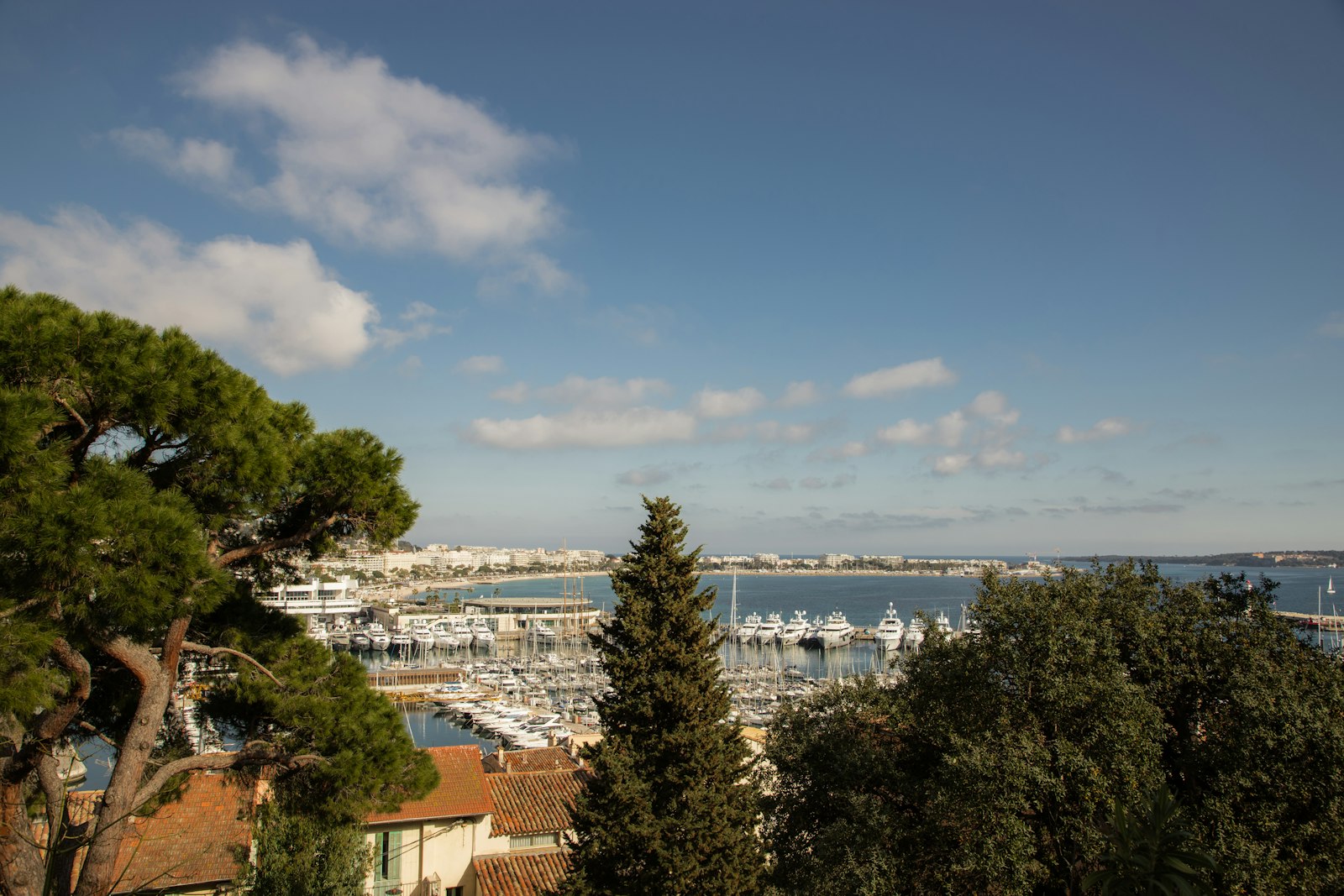
The festival expects more than 710 boats and 680 exhibitors across the Vieux Port and Port Canto, with tours and selected sea trials by appointment.
Look at SHE next to other 25-metre boats and not only within the Sanlorenzo display. Guest capacity, crew requirements, engine-room access and usable exterior space all become obvious when the comparison is four pontoons away.
Our Cannes Yachting Festival guide covers the geography and the planning. An appointment aboard SHE still needs arranging directly, and before you travel.
Luxury.it perspective
SHE makes a clear and slightly unfashionable choice: fewer people sleeping aboard, more attention to how the owner actually uses the boat, and a hybrid system meant to hold a real cruising speed rather than tiptoe out of a marina.
Five hulls sold before the first one touched water says the argument landed. Cannes is where it becomes physical, and the questions worth asking there are about circulation, three-person crew work and the distance between an electric speed on a page and an electric hour on the water.
Related guides
Continue with our Cannes Yachting Festival 2026 guide, the wider Yachts & Aviation desk and the piece on planning a Mediterranean charter.
For Cannes appointments, yacht inspections, hotels and private transfers, contact Luxury.it Concierge.