Italy’s flat tax for new residents now costs 300,000 euros a year, for up to 15 years. Anyone who moves their residence to Italy from 1 January 2026 can pay that sum on all their foreign income, whatever its size. The price was set by the 2026 budget law, up from the 200,000 euros fixed in August 2024 and the 100,000 euros at which the regime was born in 2017. The number has tripled in nine years and the queue has not shortened: 1,631 people filed under the regime in the 2024 tax returns, up from 1,242 a year earlier, and the Court of Auditors counts 1,923 beneficiaries once family members are added. Here is how the regime works today, what it costs, who is using it, and what it has done to the price of a flat in Milan.
What 300,000 euros buys
The regime is Article 24-bis of the Italian income tax code. The mechanics are short. A person who becomes resident in Italy, and who has not been resident there for at least nine of the previous ten years, can opt to replace Italian tax on all income earned outside Italy with a single annual payment. From 1 January 2026 that payment is 300,000 euros for the principal applicant and 50,000 euros for each family member who joins the option, up from 25,000. The option lasts a maximum of 15 years and can be revoked, but a missed payment ends it for good and there is no second chance. Income earned in Italy is taxed normally. No exceptions. Capital gains on qualified shareholdings sold in the first five years stay outside the regime and are taxed at ordinary rates, a rule intended to stop a move timed to a sale. The payment is made in one instalment by the June deadline for income-tax balances.
What is not in the headline
The lump sum is only part of the package, and the rest explains why families rather than individuals apply. For the years of the option, inheritance and gift tax applies only to assets located in Italy, so a foreign estate passes untaxed by Italy. The wealth taxes on foreign property and financial assets, IVIE and IVAFE, do not apply, and neither does the obligation to report foreign holdings in the tax return. An applicant can also choose to leave one or more countries out of the regime and pay ordinary tax on income from them, useful where a treaty makes that cheaper, though the exclusion cannot be reversed once made. The option is exercised in the tax return for the year of arrival or the following one; a prior ruling from the Agenzia delle Entrate is possible but not required. One change is already dated: from the 2027 tax year, a new resident can no longer combine the flat tax with the separate regime for impatriate workers, under a decree of March 2026.
Three prices, three generations of movers
The tiers depend on when residence was transferred. They do not move with the law. Whoever registered before 10 August 2024 pays 100,000 euros for the whole 15 years. Whoever registered between that date and 31 December 2025 pays 200,000. Whoever registers from 1 January 2026 pays 300,000. The trigger is civil-law residence, the entry in the municipal register, not the tax-residence test, which made the date of registration, and not the date of the move, the number that mattered at the end of 2025. The technical report attached to the budget law expected the 2026 increase to halve the flow of new applicants, to about 130 a year, and to add roughly 14.5 million euros a year to revenue from 2027, as MilanoFinanza reported in January. In Treasury terms the regime is small. Total payments between 2020 and 2024 were about 469 million euros, 153 million of them in 2024, according to the Court of Auditors’ report of June 2026.
| Residence transferred | Principal, per year | Each family member | Duration |
|---|---|---|---|
| 2017 to 10 August 2024 | 100,000 euros | 25,000 euros | up to 15 years |
| 11 August 2024 to 31 December 2025 | 200,000 euros | 25,000 euros | up to 15 years |
| From 1 January 2026 | 300,000 euros | 50,000 euros | up to 15 years |
Who is using it
The Ministry of Economy publishes the count every spring. In the 2021 returns 690 people filed the new-residents schedule; 957 in 2022; 1,242 in 2023; 1,631 in 2024. Just under half of them, 48.4 percent in 2024, also declared income earned in Italy, 102.5 million euros in total, and almost three-quarters of that was salary, which fits the profile the Court of Auditors describes: people whose income is spread across several countries, professional athletes among them. Nobody publishes nationalities. The market sees addresses. Henley and Partners, in its 2026 wealth-migration report, wrote that Italy “is among the leading European success stories of 2026” and that interest “continues to be driven by its flat-tax regime for new residents, favorable inheritance tax framework, and access to the EU market, with Milan increasingly emerging as an international financial and family office center”. The same report attributes the outflow from Britain to the abolition of the non-dom regime, replaced from 6 April 2025 by a four-year exemption for new arrivals only.
What it has done to Milan
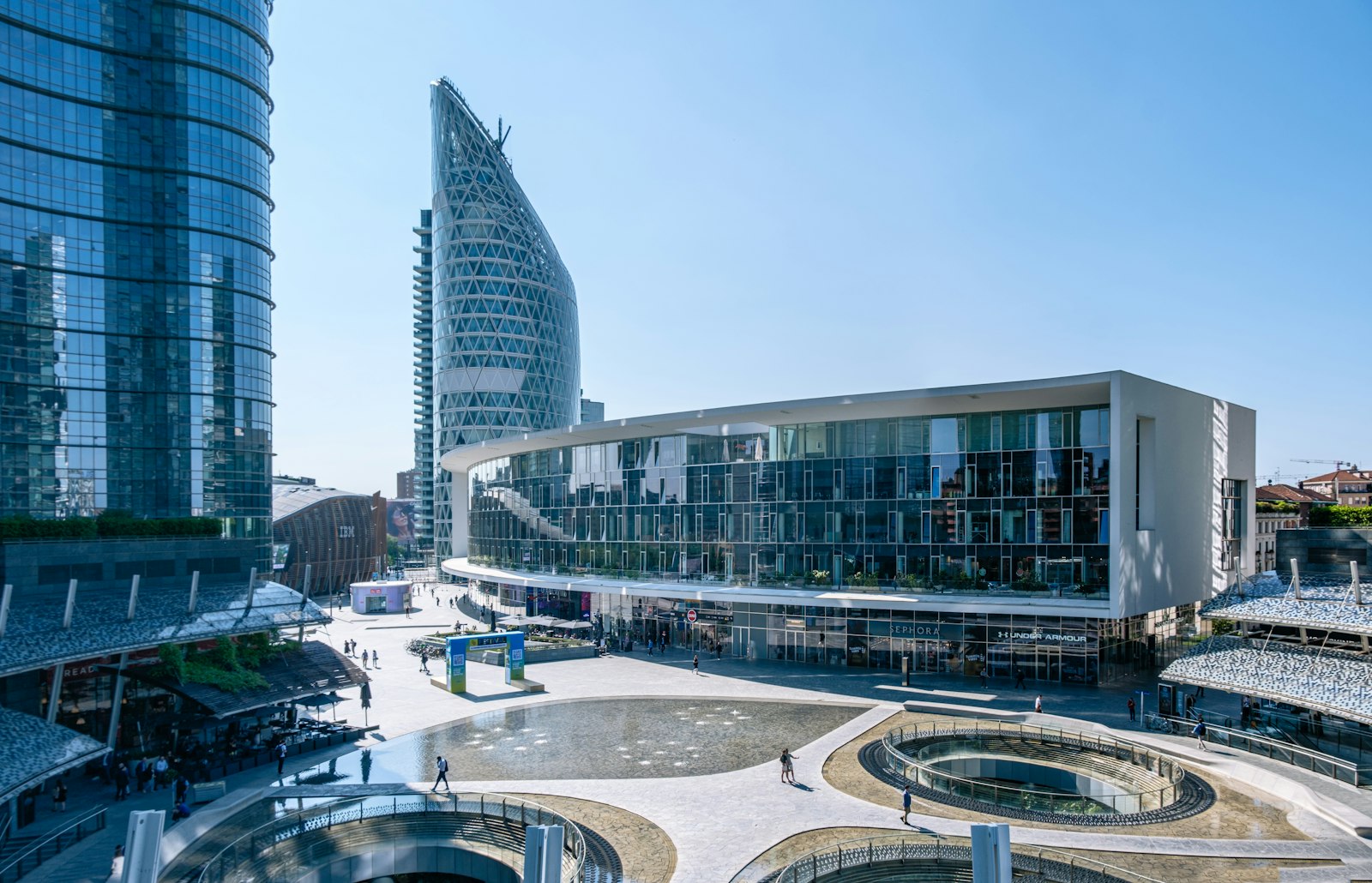
The clearest evidence is in the price per square metre. Engel and Völkers’ 2026 market report with Nomisma puts Milan’s prime residential prices between 10,000 and 23,000 euros per square metre for new or renovated stock, with peaks of 27,000 euros, and it counts international buyers at about 35 percent of transactions. Tirelli and Partners, the Milan luxury agency, tracks the top of the market from roughly 18,000 euros per square metre in 2020 to roughly 28,000 in 2025, a rise of more than half in five years, as reported by Il Sole 24 Ore in May. Lionard, the Florentine brokerage, told the same newspaper that enquiries from British buyers rose 260 percent between 2023 and 2025. Prime central London prices fell 4.8 percent in 2025, according to the same report; Milan’s rose slightly. Knight Frank’s Wealth Report of April 2026 put the point in one line.
“Italy is fast becoming Europe’s tax-led magnet. Its nationwide flat-tax regime is continuing to attract internationally mobile wealth.” Knight Frank, The Wealth Report 2026.
What has not changed, and what might
No further change to the amount has been enacted or formally proposed as of this week. None. An amendment filed in the Senate budget committee during the passage of the 2026 budget tried to attach investment conditions to the regime, a minimum holding of government bonds, stakes in Italian companies, a charitable donation, and to stretch the option to 20 years; the amendment did not pass, and the law that emerged changed only the price. The next budget is due in October, and nothing about the regime has surfaced so far in the government’s public statements about it. The Court of Auditors, in June, raised the constitutional question of equal contribution to public spending and noted that fewer than half of the beneficiaries declare Italian income; that report is now on the record and will be quoted whenever the subject returns to Parliament. For anyone planning a move, the practical position is this: the price is 300,000 euros, the clock is 15 years, the residence date sets the tier, and a tax adviser in both countries is not optional. This article is information, not advice.
The Luxury.it perspective
Three hundred thousand euros a year sounds like a sum designed to keep people out, and it is nothing of the kind. For the households the regime is written for, the flat tax is cheaper than the tax bill they left, and the inheritance rule alone can be worth more than the annual payment. What has changed since 2024 is not the arithmetic but the alternatives. London changed its rules in April 2025, Switzerland’s lump-sum regime is negotiated canton by canton, and Monaco has very little to rent. Italy, with a city that has an airport 20 minutes from the Quadrilatero, a fashion week and now a family-office industry, has become the default. The people arriving are not buying a tax rate. They are buying Milan at 27,000 euros a square metre and the lake an hour north, and the flat tax is the reason the sum adds up.
Related guides
Luxury villas on Lake Como · Luxury villa rental in Italy · Private villas with hotel services · Best restaurants in Milan