Keith Haring painted a Yamaha motorcycle in Rome in 1984, and it is now at Palazzo Braschi. The bike is one of more than 140 works and materials in Keith Haring, the exhibition that the Museo di Roma opened on Tuesday 6 October, on Piazza Navona, and will keep open until 11 April 2027. Most of the loans come from the Nakamura Keith Haring Collection in Japan, which the Rome museum calls the largest collection in the world devoted to the artist. The route runs from the chalk drawings of his New York subway years to Altarpiece: The Life of Christ, from 1990. In between sits a chapter on Italy, from a first solo show in Naples in 1983 to the Pisa mural of 1989.
More than 140 works from Kobuchizawa
The lender has a story of its own. Kazuo Nakamura founded the Nakamura Keith Haring Collection in 2007 at Kobuchizawa, in Hokuto, in Japan’s Yamanashi prefecture, and it presents itself as “the only museum in the world to exclusively exhibit works of Keith Haring”. It stands at about 1,000 metres in the southern foothills of the Yatsugatake mountains, holds approximately 300 works by Haring and more than 700 archival items, among them photographs, videos and goods produced in his lifetime, and organises the visit around a theme, “From Darkness to Hope”. For Rome, according to the Museo di Roma, the collection has lent more than 140 works and materials on an exceptional basis, joined by important loans from public and private collections. The techniques vary. Prints, works on paper, drawings, posters and sculptures sit beside paintings, the Subway Drawings and the panels Haring spray-painted along Manhattan’s FDR Drive in 1984. The curators are Kaoru Yanase, Ilaria Miarelli Mariani and Claudio Zambianchi.
Chalk, fluorescent pigment and black light
It starts underground. Between 1980 and 1985, according to the Keith Haring Foundation, Haring drew in chalk in the New York subway, and the museum dates the beginning of his career to those Subway Drawings. From 1984 come the FDR Drive panels, X-Man and a monumental Untitled which, like the Bad Boys panels, is made with fluorescent pigments and shown under black light. There is an Untitled from 1983 in acrylic on canvas, and Three Lithographs from 1985. Haring made more than a hundred posters in his lifetime, the museum notes, and the selection includes Free South Africa and the poster for National Coming Out Day. Icons, the series of 1990, gathers his best-known figures, the Radiant Baby, the Angel, the Dog and the Winged Man, as screenprints with embossing. The press release divides the route into nine sections, among them music as visual material and religious and symbolic imagery. Near the end come two late works: Apocalypse, his answer in 1988 to the visions of the writer William S. Burroughs, and Altarpiece: The Life of Christ. The last section takes its title from Haring’s own conviction.
“The public has a right to art. Art is for everybody.” Keith Haring, as quoted by the Nakamura Keith Haring Collection on its page for the exhibition in Rome.
Naples 1983, Rome 1984, Pisa 1989
Italy came early. In May 1983, the press release recalls, Haring divided his time between Milan and Naples. In Milan he turned the Fiorucci flagship store into a live painting performance, and in Naples he held his first Italian solo show, at the Galleria Lucio Amelio, for which he also made a work for Terrae Motus. The Keith Haring Foundation lists the Naples show in 1983 and a Milan exhibition at the Salvatore Ala gallery in 1984. Rome followed in 1984. Haring came for Arte di Frontiera. New York Graffiti, with Francesca Alinovi as curator, the museum writes, and painted a mural at the Palazzo delle Esposizioni in a few hours. It has since been lost. The Yamaha belongs to the same stay. In Rome, as the museum puts it, he also discovered the Christian iconography that later entered his work. Then Pisa. In 1989 he painted Tuttomondo on the wall of the convent beside the church of Sant’Antonio Abate, and the Foundation records that it was made at the request of the City of Pisa and still exists. In his catalogue essay, Zambianchi notes that, unlike the great Abstract Expressionists, Haring composed his works, monumental ones included, in a few hours or a few days. The line was clean and graphically precise, and it grew out of comics and out of the literary cut-up he learned in New York.
Palazzo Braschi, between Piazza Navona and San Pantaleo
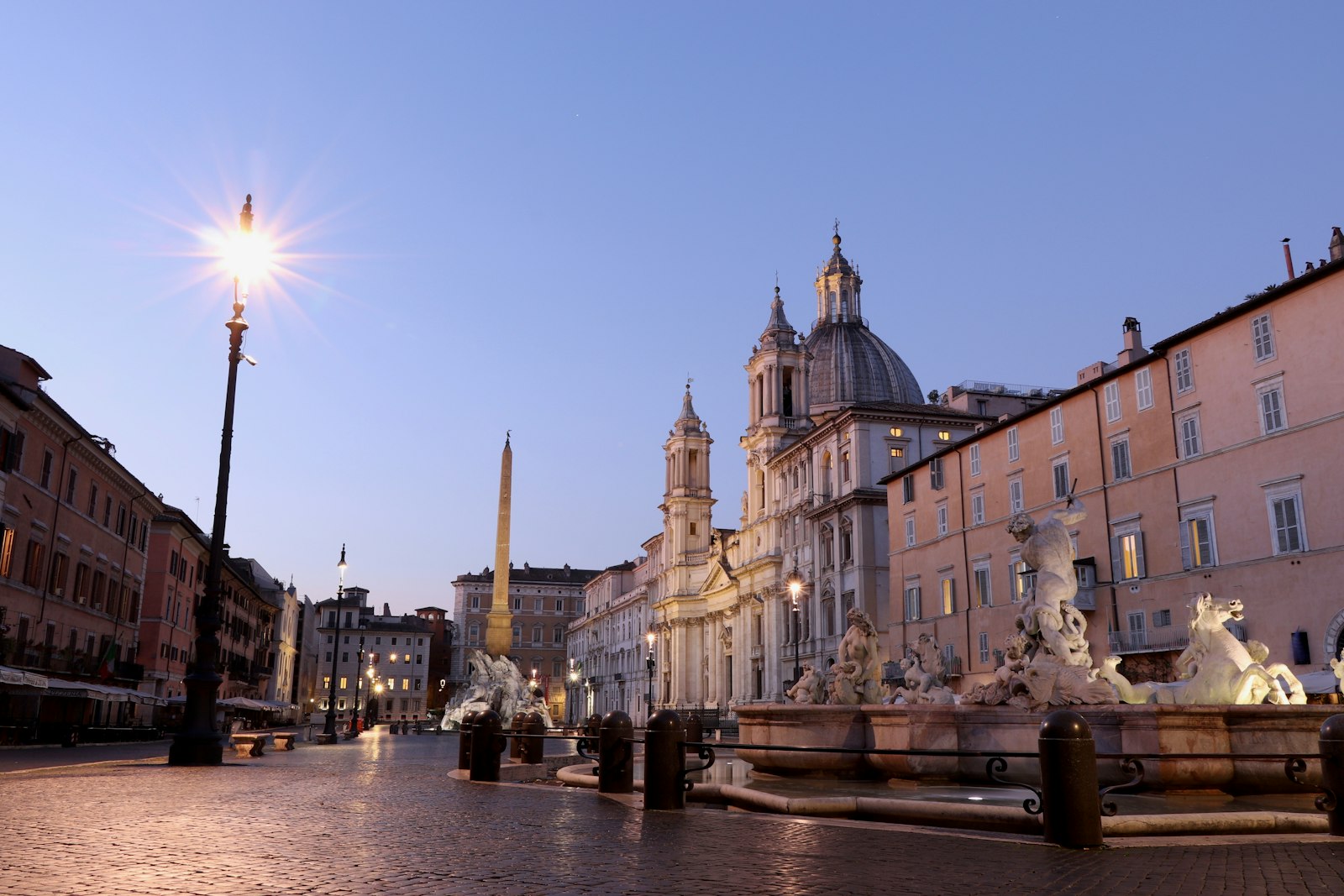
The venue is the Museo di Roma, in Palazzo Braschi, with entrances at Piazza San Pantaleo 10 and Piazza Navona 2. The exhibition is promoted by Roma Capitale and the Sovrintendenza Capitolina ai Beni Culturali, which co-produces and organises it with MondoMostre, with organisational support from Zètema Progetto Cultura. Rocco Forte’s Hotel de la Ville is the cultural partner, and Rinascente the fashion partner. It is open from Tuesday to Sunday, from 10.00 to 19.00, with last entry an hour before closing. A ticket for the exhibition alone costs 17 euros, or 15 euros reduced. This autumn Rome also has Pontormo’s Visitation at the Scuderie del Quirinale, from 9 October.
The Luxury.it perspective
Palazzo Braschi has a neighbour that suits this exhibition. On the corner of the building stands Pasquino, the ancient statue where Romans have posted anonymous verses since the 16th century, a public noticeboard long before the subway. Haring began in the same spirit, drawing for whoever walked past on a New York platform, and the exhibition text, in the lender’s English, calls him an artist who “transformed the line into a public language”. The Yamaha is the Roman proof: a machine for the street, turned into a drawing. The Japanese collection that lent most of the show presents its own museum under the theme “From Darkness to Hope”, and the Rome route closes with a section named after his line on art for everybody. Go on a weekday, book online, and leave time for the works under black light.
Related guides
Casa JK Place Roma · Ludovisi e Cadore in Rome · Zurbarán at the Louvre · New luxury hotels in Europe, 2026-2027