Sotheby’s put Turner’s Rome, from Mount Aventine on show in Rome on Tuesday 29 September. The auction house has announced it as a £50 million masterpiece and will offer it in London on 9 December, in its Old Master and 19th Century Paintings evening auction. The canvas, 92.7 by 125.7 centimetres, shows the city at first light from the Aventine Hill: the Tiber curving below, the broken Ponte Rotto jutting into the river, the Forum and the Colosseum to the right, the dome of St Peter’s on the skyline. Sotheby’s lot page does not print an estimate, which is given only “upon request”. But the painting already holds Turner’s auction record, set when it sold for £30.3 million in 2014, and its three days in Palazzo Rondinini, until Thursday 1 October, open a tour that ends back in London.
Two trips to Rome and five pencil sketches
Turner went to Rome twice. He arrived at the beginning of October 1819 and stayed until the middle of December, filling nine sketchbooks with the city and its countryside, according to Tate. He came back in October 1828 and lodged near the Spanish Steps until early January 1829. This picture belongs to the second trip. It is based on five detailed pencil sketches drawn on consecutive pages of the sketchbook now called Rome to Rimini, part of the Turner Bequest at Tate. The commission came from Hugh Andrew Johnstone Munro of Novar, a Scottish collector and a close friend of the painter, who asked, in the words of Sotheby’s catalogue, for “a view of modern Rome from a fine point that included the Tiber and some of the chief antiquities”. Turner worked on it on and off for years and showed it at the Royal Academy in 1836. The Morning Post called it “beyond praise”; the Athenaeum called it “a gorgeous picture, full of air and sunshine”.
What Turner put on the canvas
Sotheby’s catalogue reads the picture from left to right. In the foreground is the busy waterfront of Trastevere, the Ripa Grande, with its docks in the early morning and the long white façade of the Ospizio di San Michele catching the sun. Behind it rise the Janiculum and “the colossal mass of St Peter’s Basilica”. In the centre the Ponte Rotto juts into the river. To its right come the Capitoline Hill, the Forum with the Romanesque bell tower of Santa Francesca Romana, the Palatine and the Circus Maximus, with the round Temple of Hercules Victor close to the bank. On the far right, through the mist, the arches of the Colosseum just show behind dark foliage, and an umbrella pine rises from the lower right corner. Julian Gascoigne, Sotheby’s senior specialist in British paintings, told the Italian press in Rome that the Colosseum cannot actually be seen from that spot. Turner put it in anyway. The surface matters as much as the view. The canvas has never been lined, Sotheby’s found no evidence in 2014 that it had ever been cleaned, and the painter’s fingerprints are still visible in the final glaze of dark paint.
“You can see the teeth of the brush and the scrape of the palette knife in a way that is not really seen in almost any other work by the artist.” Julian Gascoigne, senior specialist in British paintings, Sotheby’s, to The Guardian, 29 September 2026.
£30.3 million in 2014, and still the record
The painting has been sold at auction twice in 190 years. It was bought at the Christie’s sale of the Novar collection in 1878, for 5,850 guineas, and stayed with the same family for 136 years, until Sotheby’s sold it in London on 3 December 2014 for £30,322,500, against an estimate of £15 million to £20 million. That set the record for Turner at auction, and according to Sotheby’s it remains both the Turner record and the highest price paid at auction for any British work of art made before the 20th century. The record it broke was also Roman. In July 2010, Modern Rome, Campo Vaccino, a view of the Forum painted three years later, sold at Sotheby’s London for £29,721,250 and went to the J. Paul Getty Museum in Los Angeles. The last two Turner records at auction were therefore both set by views of Rome. This time Sotheby’s lists the lot as guaranteed property, which means the seller has been promised a minimum price, and it has published neither a lot number nor the dates of the tour. The £50 million is the figure in its own announcement.
Three days at Palazzo Rondinini, then London, Hong Kong and New York
Rome is the first stop. The painting is on public view in the Baroque rooms of Palazzo Rondinini, the 18th-century palace on Via del Corso, from Tuesday 29 September to Thursday 1 October, and Sotheby’s describes it, The Art Newspaper reports, as the most valuable work an auction house has ever shown in Italy. From there it travels to Sotheby’s galleries in London, Hong Kong and New York before returning to New Bond Street for the sale on 9 December. The route follows the buyers. The Art Newspaper writes that Hong Kong was chosen for the interest in Turner among Asian clients and New York for the painter’s place in American collections. London’s autumn art season opens with Frieze Masters in Regent’s Park from 14 to 18 October, as set out in our guide to the October fairs.
Why a £50 million Turner, and why now
The price rests on scarcity. “The vast majority now sit in museums around the world, so I could count on one hand the number of late, great [Turner] masterpieces in private hands,” Gascoigne told The Art Newspaper, adding that no Turner of this calibre has come to the market in the twelve years since 2014. In its 2014 catalogue Sotheby’s counted no more than half a dozen major Turners left in private hands. A painting that changes hands once a generation sets its own price, and the distance between £30.3 million in 2014 and £50 million now is the measure of that wait. The buyer may not be a private collector at all. Gascoigne told the paper there is “every chance that an institution might want to enter the fray”, and in Rome he said it would be wonderful to see the picture in an Italian museum.
The view from the Aventine today
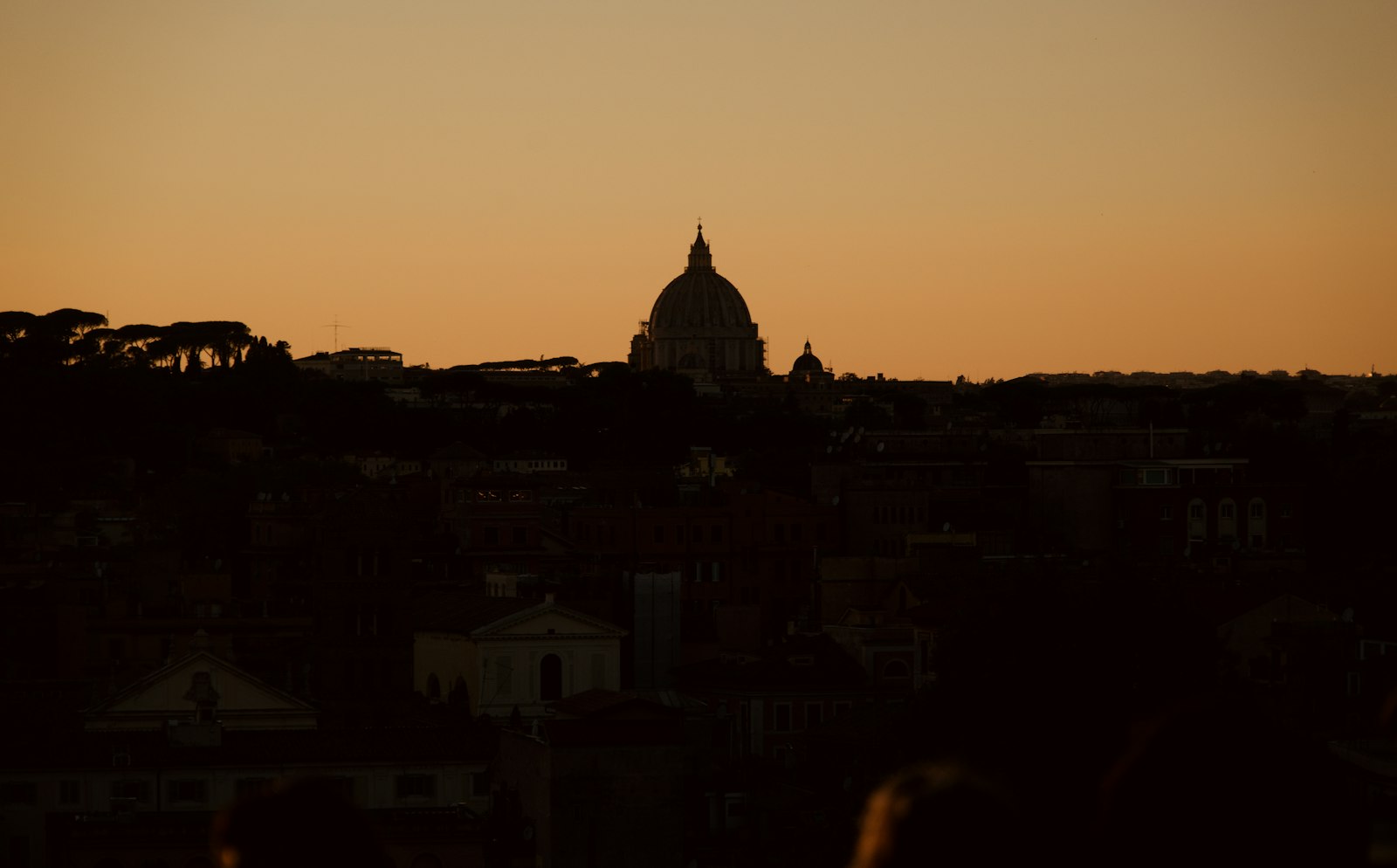
Tate places Turner’s viewpoint on the Aventine, the hill above the Tiber to the south-west of the Forum and the Colosseum, looking north-west across the river. No document fixes the exact spot. The Blue Guides point to the park beside the church of Santa Sabina, the Giardino degli Aranci, as close to where he made his sketches, and its terrace still looks across the river to the dome of St Peter’s. Part of the view has gone. The Ponte Rotto lost two of its three arches in 1887 to make room for the Ponte Palatino, so a single arch now stands in the water. The garden is free, and the light Turner painted, the first sun lifting the mist off the Tiber, comes early.
The Luxury.it perspective
Great paintings rarely go home, even for a few days. Opening the tour in Rome makes commercial sense for Sotheby’s, and it is also a gift to the city: for three days, a picture of Rome made from sketches drawn on the Aventine hangs across town from the hill where Turner stood. Whoever buys it on 9 December acquires the canvas. The view belongs to everyone, and it has kept what Turner came for, the river, the domes and the morning light, while losing two arches of a bridge. For anyone in Rome this week the order is simple: Palazzo Rondinini by Thursday, then the Giardino degli Aranci early the next morning. If the painting ends up in a museum, as Sotheby’s own specialist hopes it might, the pairing will last longer than three days.
Related guides
Casa JK Place Roma · Ludovisi e Cadore in Rome · LVMH’s Journées Particulières 2026 · The World’s 50 Best Hotels 2026