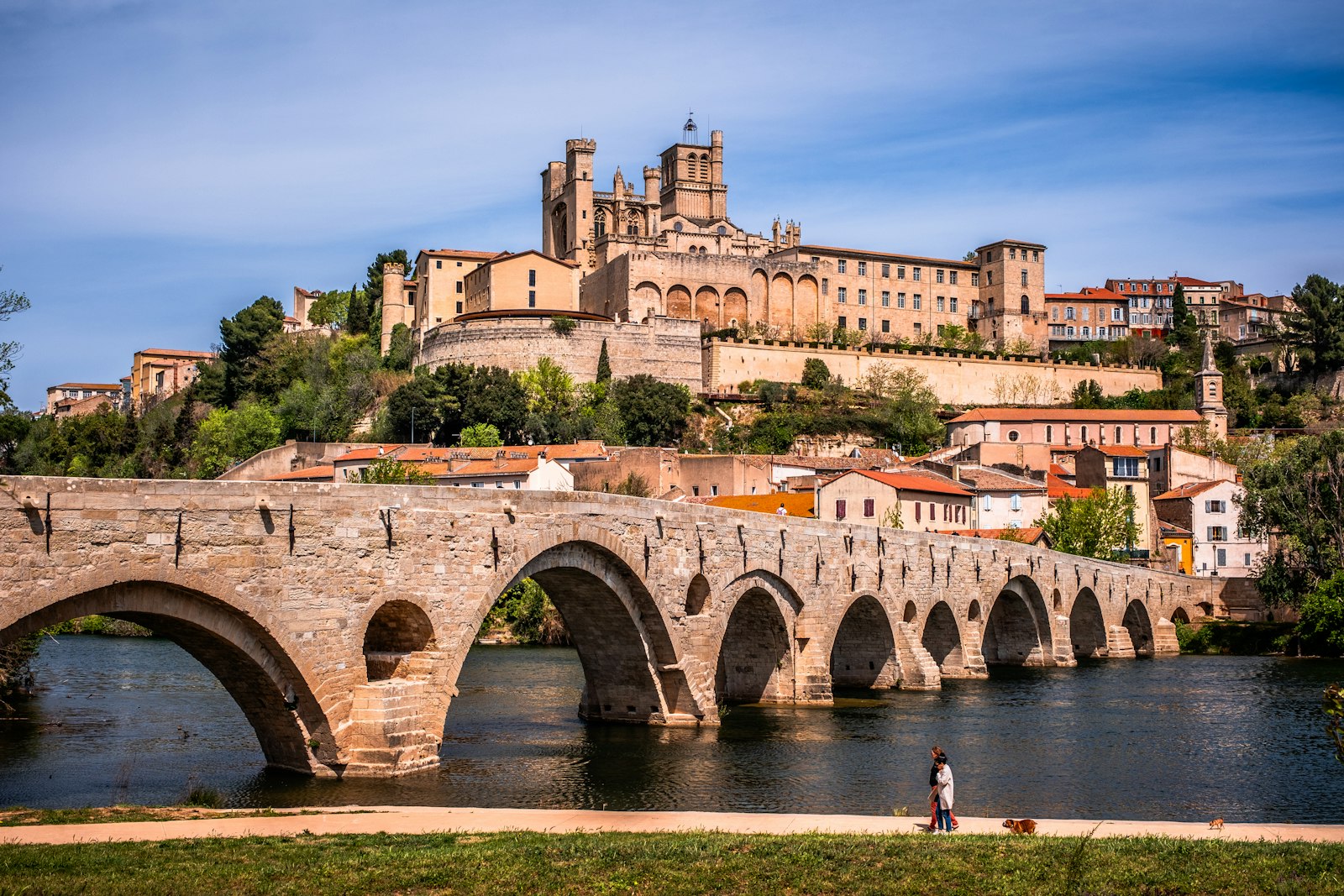
The Fondation Louis Vuitton reopens in Paris on Friday 9 October with 728 works and documents. All of them belong to the story of one man, Gustave Fayet (1865-1925), born into a family of wine merchants in Béziers and, in the Fondation’s words, among the first to collect Van Gogh. The roll call is that of a museum of modern art: 10 paintings by Van Gogh, 78 works by Gauguin, 86 by Odilon Redon. At its centre hangs Van Gogh’s Self-Portrait with Bandaged Ear and Pipe, painted in January 1889, which the Fondation says has not been exhibited in France since 1937. Fayet’s name is far less familiar than those of the painters he bought, and the Fondation presents the show as “a forgotten chapter in the history of modern art and the decorative arts”. Until 8 March 2027, it reunites more than 250 works from his collection for the first time in a century.
728 works, 64 institutions and 71 private collections
The figures are the Fondation’s own. The exhibition occupies all the spaces of the Frank Gehry building in the Bois de Boulogne and comes in two parts: the collection across three floors, and Fayet the designer on the top floor, with more than 370 of his own creations, “most of them never before exhibited and specially restored for the occasion”. The loans come from 64 international institutions and 71 private collections. Beyond the three headline painters there are paintings and pastels by Degas, Cézanne, Toulouse-Lautrec, Renoir, Berthe Morisot, Signac, Bonnard, Vuillard and Matisse. Fayet himself assembled “more than 750 major works of modern art (excluding prints)”, and his Paris home held what the Fondation calls a Gauguin “museum” of nearly 200 works. The show is the result of several years of research. Sylvie Patry, chief curator at the Musée d’Orsay, is its guest chief curator, with Angeline Scherf for the Fondation, and Robert Carsen is the artistic director of the exhibition.
The wounded painter and the Yellow Christ
The loan at the centre of the show measures about 50 by 45 centimetres. The Fondation describes the self-portrait as painted “in the aftermath of the dramatic break between Paul Gauguin and Vincent Van Gogh”, showing “an artist who is wounded yet determined to continue painting”. It was one of the masterpieces of Fayet’s collection. It now belongs to a private collection. It has not been lent to an exhibition since 1990, according to the Fondation, and in Paris it hangs beside Gauguin’s Self-Portrait with a Palette, “two radically different visions of the modern artist in an unprecedented dialogue”. Gauguin is the other pole of the show. For the first time in France, three of his paintings hang together: The Yellow Christ of 1889, lent by the Buffalo AKG Art Museum, Self-Portrait with the Yellow Christ from the Musée d’Orsay, and Le Calvaire breton of 1889 from the Musées royaux des Beaux-Arts de Belgique in Brussels. All three once belonged to Fayet or to his close friends. Other loans include Gauguin’s Trois Tahitiens of 1899 from the National Galleries of Scotland, Matisse’s Place des Lices, Saint-Tropez of 1904 from the SMK, the National Gallery of Denmark, and Cézanne’s Le grand pin from the Museu de Arte de São Paulo.
“Looking through your collection, I see that I am in the company of masters, and that makes me happy, but also rather shy.” Paul Gauguin, letter to Gustave Fayet, March 1902, as quoted by the Fondation Louis Vuitton.
Redon’s panels leave Fontfroide
In 1908 Fayet bought the Cistercian abbey of Fontfroide, near Narbonne, intending to restore it and transform it into a “total work of art”. Two years later he asked his friend Odilon Redon to decorate its library. Redon painted the canvases in his Paris studio in 1910 and came to supervise their installation in 1911, according to the French heritage register: Le Jour on one wall, La Nuit facing it, each 200 by 650 centimetres, and over the door a small panel, Le Silence, a face with a finger to its lips. On 9 September the abbey and the Fondation announced that all three, classified as historic monuments in 2022, are lent to Paris and leave their original setting for the first time. Taking them down brought a surprise. Under La Nuit, Redon had painted figures directly on the stone, and these sketches can be seen at Fontfroide only while the canvases are away, for the first and probably the only time. In the meantime the library shows works from the Fondation’s own collection by Omar Ba and Bernard Frize. The Fondation has not said in which gallery the panels will hang.
Stoneware, blotting paper and carpets
The top floor shows a side of Fayet few visitors will know. In 1896, with the painter and sculptor Louis Paul (1858-1922), a former student of Rodin, he founded a stoneware workshop in Béziers that produced more than a hundred ceramic pieces until 1904. In June 1898 a few of his experimental pieces captivated Siegfried Bing, the Paris dealer then at the forefront of decorative experimentation. Around 1912, after nearly ten years away from painting, Fayet picked up the brush again, often starting from watercolour on blotting paper. “A beautiful blot can be the starting point for a beautiful drawing,” in his own words. In 1920 he founded the Atelier de la Dauphine in Paris to turn thousands of drawings and watercolours into carpets. For the show the Fondation has restored the carpets he made for the Maison Léon Losseau in Mons, in Belgium, with a set of preparatory pattern drawings, and has traced and restored some ten dresses that show his links with Paul Poiret, Jacques Doucet and Jeanne Lanvin. There are ceramics, watercolours, illustrated books and the plates he drew for Mireille, Frédéric Mistral’s Provençal poem.
After Shchukin, Morozov and Courtauld
The exhibition extends a line the Fondation calls “Icons of Modern Art”, its shows built around great collectors: Sergei Shchukin from October 2016 to March 2017, Samuel Courtauld in 2019, the brothers Mikhail and Ivan Morozov from September 2021 to April 2022. Fayet is a different kind of collector. Suzanne Pagé, the Fondation’s artistic director, told Paris Select Book in June that unlike Shchukin or Courtauld, Fayet never set out to build a museum, and that it is the artist in him that sets him apart. The galleries have been closed since the Calder exhibition ended on 16 August, and on 9 October a second show opens alongside Fayet, Open Space #19, devoted to Mohammad Alfaraj. The Musée d’Orsay, whose exceptional support the Fondation credits, is busy this autumn: it also co-organises Renoir and Love in London. A week after the opening, on 16 and 17 October, LVMH’s Journées Particulières include a tour following in the footsteps of Fayet, already fully booked, although visitors may join on the day, subject to availability. The programme is in our guide to the open days.
A centenary, a database and the south
The timing follows an anniversary. Fayet died in Carcassonne on 24 September 1925, and the association that guards his legacy at Fontfroide has marked the centenary with a season of exhibitions and events across partner institutions. The abbey has two shows of its own: Gustave Fayet: symphonie décorative à Fontfroide until 17 January 2027, and one on Fayet the entrepreneur until 29 November. The Fondation and Fontfroide have worked together since 2024. The research will outlast the five months in Paris. Two books are co-published with Gallimard, an international symposium is planned, and a public database will catalogue some 740 works and 100 prints identified so far in Fayet’s collection. Art Basel Paris follows from 23 to 26 October, as set out in our guide to the October fairs, and collectors in town for the fair will find a collector’s story waiting in the Bois de Boulogne.
The Luxury.it perspective
The interesting word in the title is not Van Gogh, who does not appear in it. It is designer. The Fondation gives Fayet the maker as much room as Fayet the collector, and the pairing explains both: a man who bought Gauguin’s colour and Redon’s dreams, then spent his last years turning blots of watercolour into carpets. Collecting, for him, was a way of working. The practical advice is simple. Book a slot, since tickets are sold by time, at 18 euros full price or 36 euros for a family, and leave the top floor the time the painters will try to take from it. Then, if the calendar allows, take the train south. Until 17 January 2027 Fontfroide shows Fayet in his own setting, and while Redon’s panels are in Paris, its library reveals what Redon painted on the stone beneath them.
Related guides
Van Gogh’s $180m chestnut trees at Sotheby’s · Turner’s Rome, from Mount Aventine · Painting the French Riviera at the RA · The best hotels in Paris