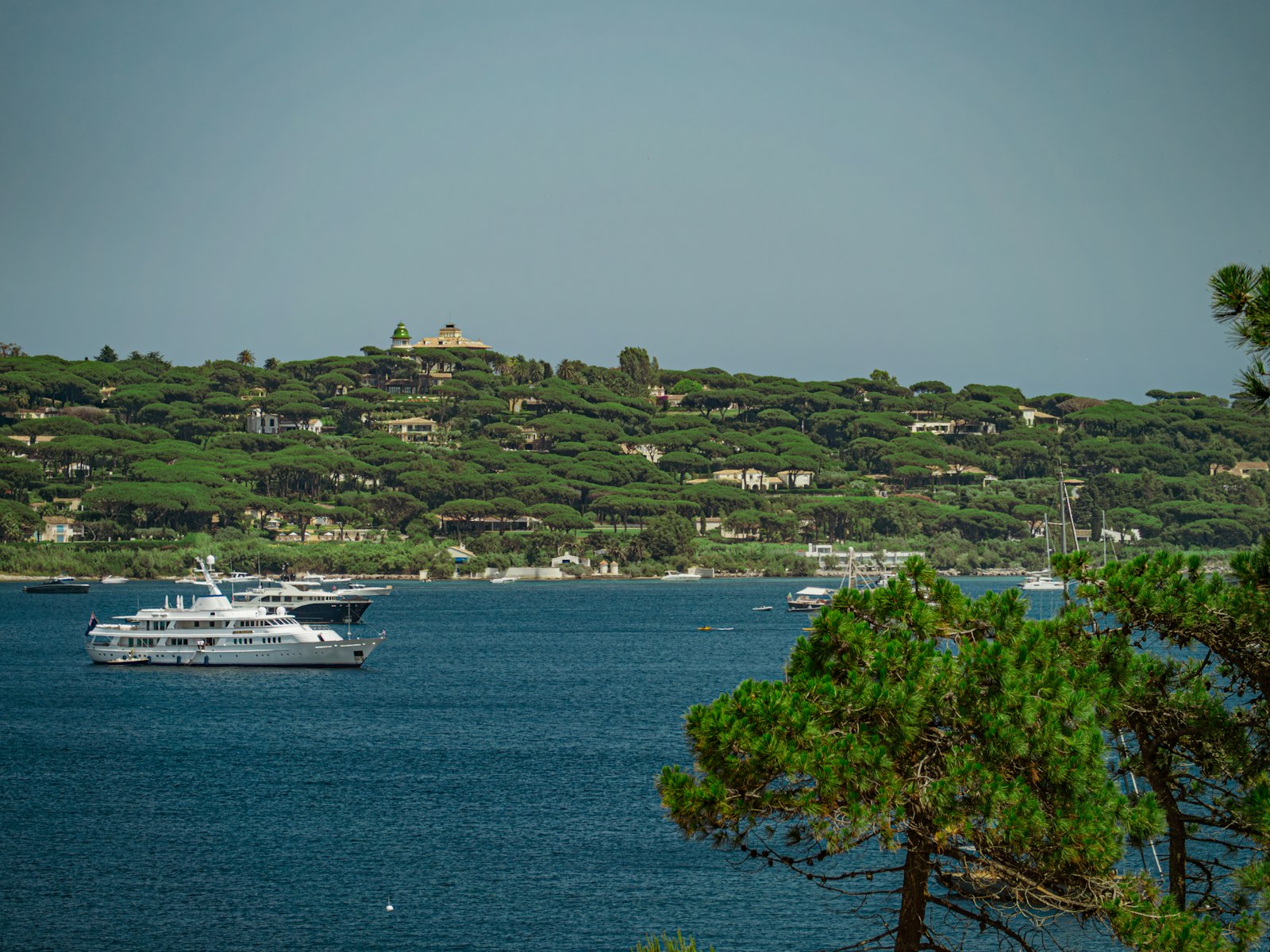
Svea won the J Class at Les Voiles de Saint-Tropez on Saturday 3 October, on a tie-break. She and Rainbow finished level on 9 points after six races, with one discard; Svea counted three race wins, Rainbow one. In the last race, sailed in 10 to 12 knots of breeze and autumn sunshine, a spinnaker wrap at the first top mark cost Svea minutes, and she still crossed second, behind Hanuman and ahead of Rainbow. It was the closest finish of a week that brought 251 boats to the Gulf of Saint-Tropez, from gaff cutters of the 1890s to 100-foot maxis. For a class that, in its secretary’s words, had not returned to proper fleet racing for some years, it was the regatta of the season.
Six races, one discard, 9 points each
The scoreline tells the story. Svea opened with a win on Monday 28 September, when light winds allowed only one race. On the Tuesday she failed to finish twice, after her halyard lock system failed seconds into the second race and the headsail slid to the deck; Rainbow and Hanuman shared the two wins. One day was lost to wind too light and unsettled for racing. On Friday 2 October Svea won both races, Rainbow second each time, 1 minute 10 seconds and then 32 seconds behind, and the two went into the final day on 7 points apiece. On Saturday Hanuman won from a perfectly timed start at the pin end. “Both teams, Svea and Rainbow, finish on the same nine points aggregate,” the J Class Association wrote, with Svea counting three firsts, a second and a DNF, and Rainbow four seconds and a first. The International Maxi Association called it “the tightest of all conclusions”.
Three Js and 30-strong crews
The boats explain the attention. Svea is the largest of the three, 43.61 metres overall and 183.1 tonnes, with 955.5 square metres of upwind sail. Her lines were drawn in 1937 by the Swedish designer Tore Holm with the boatbuilder Gustav Plym, for an America’s Cup challenge the war ended; she was launched in January 2017, her hull built by Claasens and completed at Vitters. Rainbow, a Dykstra design launched in 2012, recreates Starling Burgess’s 1934 Rainbow, which won the America’s Cup that year 4-0 against Endeavour; she is about two metres shorter than the bigger Js. Hanuman, launched by Royal Huisman in 2009, is a replica of Charles Nicholson’s Endeavour II of 1937, and this was her crew’s first J Class event together, a mix of TP52, maxi and America’s Cup sailors. Each boat carries a crew of about 30. On Rainbow, Ed Baird called tactics and Ben Saxton ran strategy.
“It is so close, so very close, as it should be. It is amazing for us. It is amazing for the class after years of not really being pushed that hard.” Paul ‘PK’ Kelly, Svea’s boat captain, J Class Association, 3 October 2026.
The Corinthian King’s Cup, a fourth time
The win also kept the class’s premier trophy on board. The Corinthian King’s Cup, awarded since 2012 to an owner-driver in the season’s most significant regatta, according to the organisers, has now gone to Svea four times: in 2022 and 2023 at Porto Cervo, in 2024 in Palma and now in Saint-Tropez. The J Class Association adds that Svea has stayed unbeaten at every regatta she has raced since 2022. The margin was small, and her rivals said so. “We came into the last day with a chance to win it,” said Ben Saxton, “we were a lot closer than at Superyacht Cup Palma Richard Mille.” On Hanuman, Vasco Vascotto spoke of a crew still learning the boat: “Day 7 of our process in a J Class and winning a race like that we have to be happy.”
51 maxis and a 77-foot winner
The maxis brought a record fleet of 51, according to the International Maxi Association, five more than the 46 of 2022 that the organisers gave as the previous mark. In Maxi 1, 13 boats raced for the Edmond de Rothschild Trophy. Jethou, a 2012 Judel Vrolijk design built as a 72-footer and lengthened to 77 feet, started the last day level with V, won the coastal race and finished three points clear, with the Maxi 72 Balthasar third. “The boat really likes those conditions,” said Brad Butterworth, Jethou’s tactician. Second place was enough for V, the 100-foot Wallycento, to take the five-event IMA Mediterranean Maxi Inshore Challenge, after a class win in Sorrento in May and a second place to Leopard 3 at the world championship in Porto Cervo. The Wally 77 Lyra won Maxi 2, the Vismara 62 Yoru took Maxi 3 on countback for her third win here in a row, and the Dehler 60 Blue Oyster won Maxi 4.
A Rolex Trophy for the P Class
Among the classics, Rolex gave its trophy for the twentieth year to a class new to Saint-Tropez, four P Class gaff cutters from the American East Coast. Olympian, a William Gardner design and the narrowest of the four, won it after a close week with Chips, following Cambria last year. The schooner Elena of London won the Big Boats, with the ketch Sumurun second. Kismet, the Fife cutter of 1898, won the Epoque Aurique class with three race wins in four, ahead of the Herreshoff sloop Oriole and the New York 40 Marylee. Leonore beat 18 rivals in Epoque Marconi A, the largest class, and Kiwi Magic took the 12 Metres on a tie with French Kiss. Among the moderns, the TP52 Spirit of Lorina won the BMW Trophy in IRC 0, and the Sun Fast 3200 Overdose Neo, entered by the Société Nautique de Saint-Tropez itself, won IRC 4. The Comité International de la Méditerranée marked its centenary with a trophy that went to Hallowe’en, Eugenia V, Ojala, Rowdy and Varuna 2, each in its category.
From the Nioulargue to a 28th edition
The regatta began as a challenge. In 1981 the Swan 44 Pride and the 12 Metre Ikra raced from the Portalet tower around the buoy on the Nioulargue shoal to a finish off the Club 55, a match that became the Nioulargue, created that year by Patrice de Colmont; in 1984 the J Class Velsheda sailed in the gulf. The Nioulargue stopped after 1995, and in 1999 the Société Nautique de Saint-Tropez started Les Voiles de Saint-Tropez in its place. This 28th edition ran from 26 September to 4 October, with 20 categories, 77 classic yachts in seven of them, the oldest Sky of 1890, and some 3,500 sailors expected. Rolex has been a partner since 2006. The Riviera’s late season began at the Cannes Yachting Festival and continued with the Monaco Yacht Show; Saint-Tropez is where the season ends under sail.
The Luxury.it perspective
Kelly’s line is the one to keep: “as it should be”. A J Class is worth watching because three boats of this size, built from designs of the 1930s, can still finish a week on the same score, and this year they did. The J Class Association’s own word for Saint-Tropez was perfect, and the margin proves the point better than any trophy. For anyone planning the trip, the shore is part of the event: the prize-givings are held at the Village des Voiles, and the final weekend decides the titles. Book the week early.
Related guides
Ferrari Hypersail in Livorno · Benetti Clear Waves · Luxury hotels in Monaco · Yacht charter in Italy