The Scuderie del Quirinale in Rome opens Pontormo on Friday 9 October, until 7 February 2027. The Scuderie bills it as “the first major monographic exhibition ever devoted to Pontormo” (1494-1557), with his most important paintings, a selection of drawings and loans from the Uffizi and from museums in Paris, London, New York, Washington, Chicago and Los Angeles. At its centre stands the Visitation, an altarpiece of about 1528-29, two metres high, painted for the parish church of Carmignano, near Florence. The number of works and the full list of loans have not been published. But after a 2014 exhibition in Florence that paired him with Rosso Fiorentino, Pontormo has a major show of his own.
Tickets from 18 euros, lenders from the Uffizi to the Getty
The curator is Cristina Acidini, described by the Scuderie as one of the foremost authorities on 16th-century Florentine art, with a scholarly committee of Elena Capretti, Philippe Costamagna, Bruce Edelstein and Carlo Falciani. It is organised by Ales – Scuderie del Quirinale in partnership with the Uffizi Galleries and produced with Electa, which publishes the catalogue. Besides “a remarkable group of works from the Uffizi Galleries”, the Scuderie lists loans from the Galleria dell’Accademia, the Musei del Bargello, the Istituto Centrale per la Grafica, the Louvre, the National Gallery and the British Museum in London, the Metropolitan Museum of Art, the National Gallery of Art in Washington, the Art Institute of Chicago and the J. Paul Getty Museum, among others. The route is broadly chronological, with thematic sections on the main moments of his career. The Scuderie is open daily from 10.00 to 20.00, last entry 19.00. Its tickets cost 18 euros, 12 for visitors aged 18 to 29 and 5 for under-18s, plus a 2.50-euro booking fee, and online sales opened on Monday 28 September.
The Visitation, by way of Poggio a Caiano
The altarpiece has a story of its own. Painted on panel, 202 by 156 centimetres, for a family chapel in the church at Carmignano, it was never mentioned by Vasari and returned to scholars’ attention through Carlo Gamba’s attribution in 1924, according to Italy’s Ministry of Culture. A will of 1538 shows that by then it was finished and destined for the family’s altar. Its restoration by Daniele Rossi, for the 2014 Palazzo Strozzi exhibition, brought back the vivid colours of the original. For the past three years it has not been in its church. The Diocese of Pistoia announced the building’s closure in June 2023 for structural checks, and from 5 October 2024 the Visitation was shown in the Sala del Fregio of the Villa Medicea di Poggio a Caiano, a short walk from the hall where Pontormo painted his fresco of Vertumnus and Pomona in 1520-21. The Diocese has called the church the painting’s home and hopes it will return there.
“Bringing together the artist’s most important paintings alongside an exceptional selection of drawings, the exhibition offers an unprecedented opportunity to explore the full breadth of Pontormo’s artistic production.” Scuderie del Quirinale, on Pontormo.
Jacopo Carucci, called Pontormo
His name came from his birthplace. Jacopo Carucci was born in 1494 at Pontorme, near Empoli, and trained in Florence with Piero di Cosimo and Mariotto Albertinelli before joining the workshop of Andrea del Sarto, where he worked alongside Rosso Fiorentino, the Uffizi records. In 1523 he took refuge from the plague at the Charterhouse of Galluzzo. Several of his masterpieces were made for their places: the Deposition of 1526-28 for the Capponi Chapel in Santa Felicita, the Vertumnus and Pomona lunette at Poggio a Caiano, and the frescoes for the choir of San Lorenzo, painted from 1546 to 1556 and destroyed in 1742, which survive through his drawings, as the National Gallery in London notes. Bronzino was his pupil. He died in Florence, in 1556 or 1557 depending on the museum; the Scuderie gives 1557. The Metropolitan Museum traces his preference for red chalk to his master, Andrea del Sarto, and the show promises an exceptional selection of drawings.
Florence 2014, New York 2018, Rome 2026
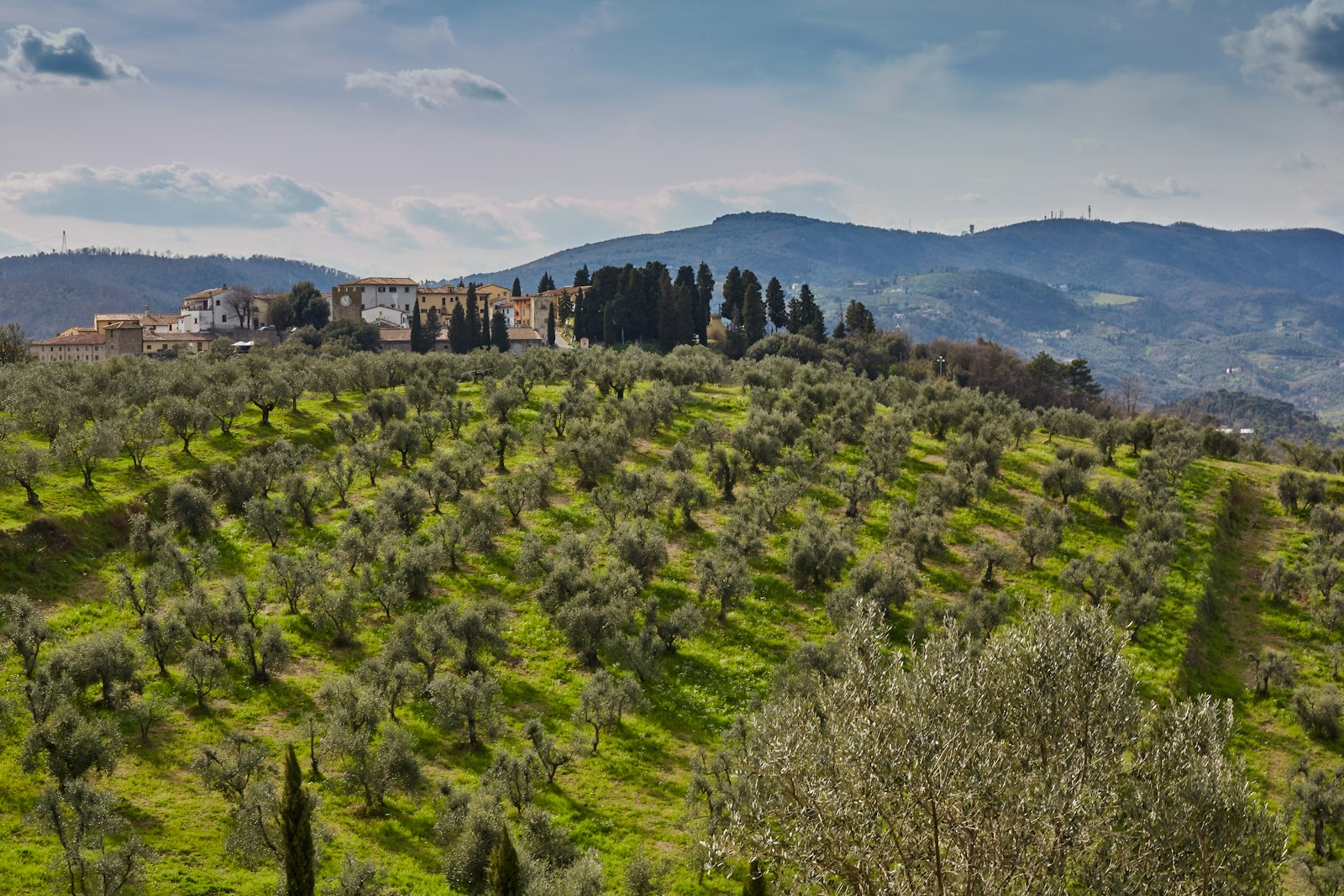
The Visitation has travelled before, each time for a reason. In 2014 Palazzo Strozzi’s Pontormo e Rosso Fiorentino brought together more than 80 works by the two painters and drew about 150,000 visitors; in 2017 the same palace hung it beside Bill Viola’s video The Greeting, which it had inspired. In 2018 it anchored a small show at Palazzo Pitti organised by Bruce Edelstein, now on the Rome committee; the show then went to the Morgan Library and Museum in New York, from September 2018 to January 2019, and to the Getty in Los Angeles until April 2019. The Morgan called it the work’s first trip from Carmignano to the United States, and the Getty said the exhibition was organised to raise support for the conservation of the Carmignano church. For readers planning a Tuscan detour, there is our guide to the luxury hotels of Tuscany and our report on La Réserve in Florence’s Palazzo Segni.
The Luxury.it perspective
The interesting word in the Scuderie’s text is monographic. Pontormo has been shown beside Rosso, beside Bill Viola and in a single room around one painting; in Rome he is, for once, the whole subject, and the Visitation, whose own church is closed, becomes the reason to see the rest. The practical advice is to book online and to go early, at 10.00, or after 18.00, since the doors stay open until 20.00 every day. Then complete the picture in Tuscany. The Deposition hangs in the chapel it was painted for, in Santa Felicita in Florence, and the Vertumnus and Pomona fresco is still at Poggio a Caiano, in the villa where Pontormo painted it.
Related guides
Ludovisi e Cadore in Rome · Casa JK Place Roma · Gustave Fayet at the Fondation Louis Vuitton · New MICHELIN restaurants in Italy