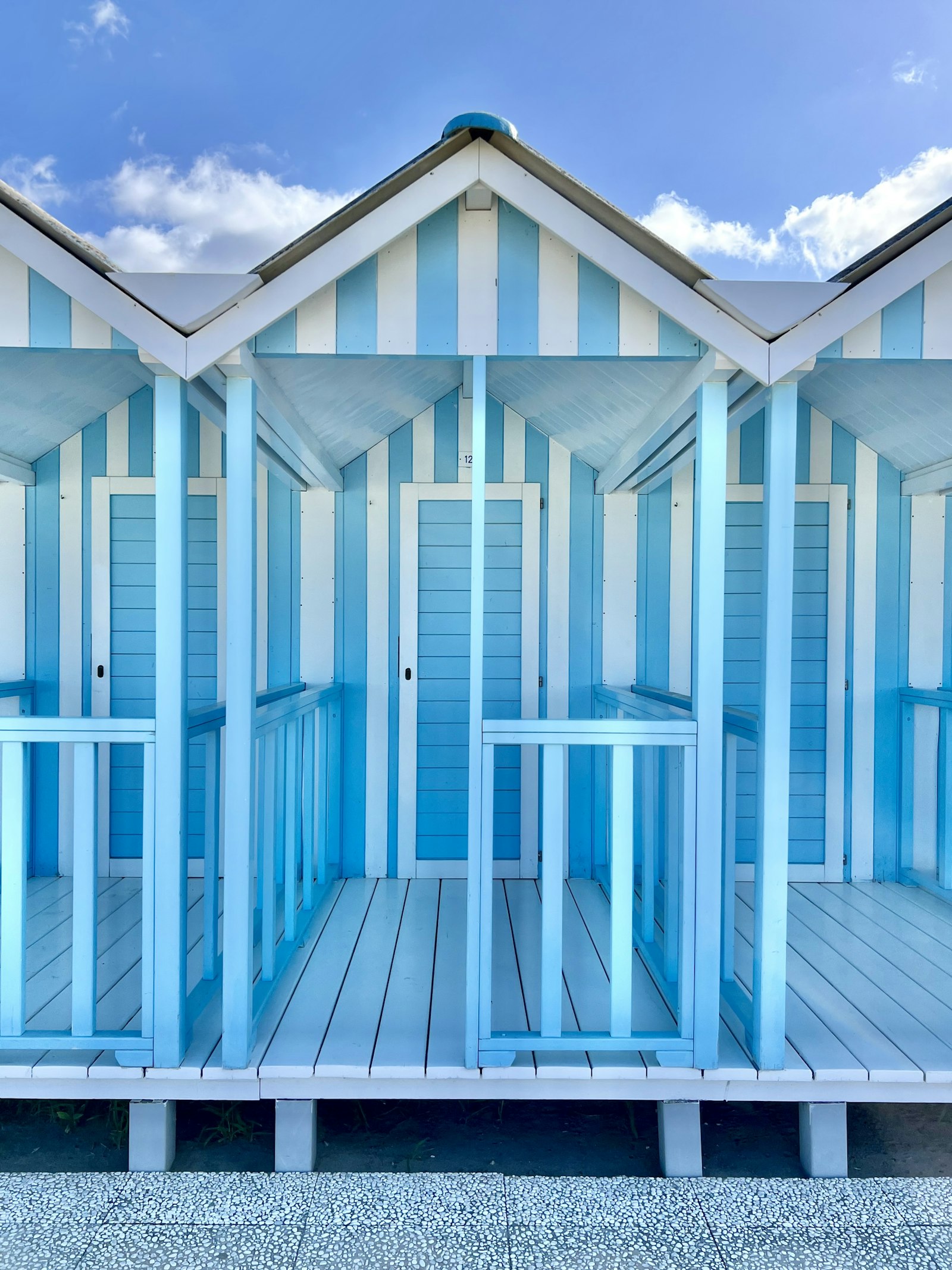
In Forte dei Marmi, the most valuable real estate is not a villa. It is a beach cabin held by the same family for decades.
The town has plenty of places with white cushions and expensive fish. What it actually runs on is ritual, and the best version of the town is built around it: the same beach for years, the same table if you can get it, the same family names, the same quiet choreography between morning sea, lunch, shade, bicycle, aperitivo, dinner.
That is why Da Giacomo arriving at Marechiaro is more interesting than a normal restaurant opening.
Giacomo Milano has opened Da Giacomo Forte dei Marmi inside the historic Marechiaro beach club, combining restaurant, lounge, cabins and beach-club life in one of Versilia’s most established seaside addresses. Marechiaro itself dates back to 1913, while the new project has been shaped with architecture by Fabrizio Casiraghi. This is not Milan simply going to the beach. It is Milan trying to understand how Forte dei Marmi already works.
Why Marechiaro matters
Beach clubs in Forte dei Marmi are not just beach clubs. In many Mediterranean destinations, a beach club is a product: book the bed, order the wine, take the photo, leave. In Forte dei Marmi, the better stabilimenti are closer to private seasonal institutions. They carry memory. People return. Families recognise each other. The cabin is not storage; it is identity.
That is why Marechiaro gives Da Giacomo something valuable from day one. The address already has history. The Giacomo layer adds hospitality, restaurant culture and a Milanese sense of polish, but the beach itself gives the project legitimacy. Without that, it would risk becoming another imported luxury concept looking for a coastline.
In Forte dei Marmi, new luxury has to pretend it has always been there.
The best projects do not erase the old ritual; they make it easier to continue. The official Marechiaro presentation, built around Versilia memory, lounges, cabins and the evolution of the property through the vision of Giacomo Milano, speaks exactly that language.
The right kind of Milanese import
Da Giacomo has always been about more than food. In Milan, the name carries a specific atmosphere: polished but not cold, classic but not frozen, serious about seafood without becoming solemn. It has a room culture. People go because they know what the evening should feel like before the first plate arrives.
That kind of identity travels better to Forte dei Marmi than a trendier restaurant would. Versilia does not want culinary fireworks every night. It wants places where the guest can relax into the code: fish, pasta, wine, service, recognisable rhythm, the feeling that the restaurant understands both Milan and the coast.
The wider Marechiaro project includes Da Giacomo Forte dei Marmi, Bar Luna and a beach-club structure that runs from breakfast through lunch, aperitivo and dinner. That all-day logic is the point: the most powerful luxury addresses in summer are not only dinner restaurants. They own more than one moment of the day.
Forte dei Marmi is becoming more curated
Forte dei Marmi has always had money. That is not new. What is changing is the quality of curation around that money.
The town is not trying to become Ibiza or Mykonos. Its strongest version is still slower, more Italian, more family-coded, more private in feeling even when everybody knows exactly who is there. But the hospitality layer is getting sharper. Fashion brands, restaurant groups, beach clubs and hotels understand that Forte dei Marmi is one of Italy’s most valuable summer stages: an affluent, repeat, domestic and international audience, a concentrated but powerful season, and a visual language everyone can read. Bikes, pine trees, beach tents, marble, linen, old Tuscan villas, children, grandparents, aperitivo, dinner.
A project like Da Giacomo at Marechiaro works because it does not have to invent a fantasy. It steps into one.
The beach-club restaurant is now serious business
For a long time, beach-club food could hide behind the view. That is harder now. The luxury guest has become more demanding and, frankly, less forgiving. If they are paying for a cabana, a bottle and a long lunch, the kitchen cannot behave like an accessory.
This is where Giacomo Milano’s arrival is strategically strong. The restaurant gives Marechiaro a gastronomic anchor. The beach gives the restaurant a daily rhythm. Together they create something more useful than a seasonal pop-up: a place that can be used in different ways. Lunch after the sea. Coffee before leaving the beach. Aperitivo at Bar Luna. Dinner without changing mood too much. Guests do not have to move across town to feel they have entered the evening.
That is what high-end hospitality wants now: fewer transitions, better ones.
Who this is for
Da Giacomo Forte dei Marmi is not for the traveller looking for a hidden trattoria, and that is fine. Not every meal has to pretend to be a discovery.
This is for the guest who wants Forte dei Marmi as Forte dei Marmi: elegant, controlled, coastal, familiar, slightly formal without being stiff. Milanese regulars. Tuscan summer families. International visitors who have learned that Versilia is not only a beach destination but a social one. And anyone who understands that in places like this, the room matters almost as much as the food. Sometimes more.
Luxury.it perspective
Da Giacomo at Marechiaro is not important because Forte dei Marmi lacked restaurants. It is important because it shows where Italian resort hospitality is going. The winning formula is not loud novelty. It is heritage plus execution: a historic beach club, a serious restaurant name, a designer who understands atmosphere, and a town whose summer ritual is already powerful. In Forte dei Marmi, the smartest new places are not trying to change the code. They are trying to be accepted by it.
Related guides
Luxury Beach Clubs in Italy · Michelin Star Restaurants in Italy · Restaurants · Dolce&Gabbana at Cala di Volpe
Booking Versilia this summer, from cabins to tables? Request access through Luxury.it Concierge.