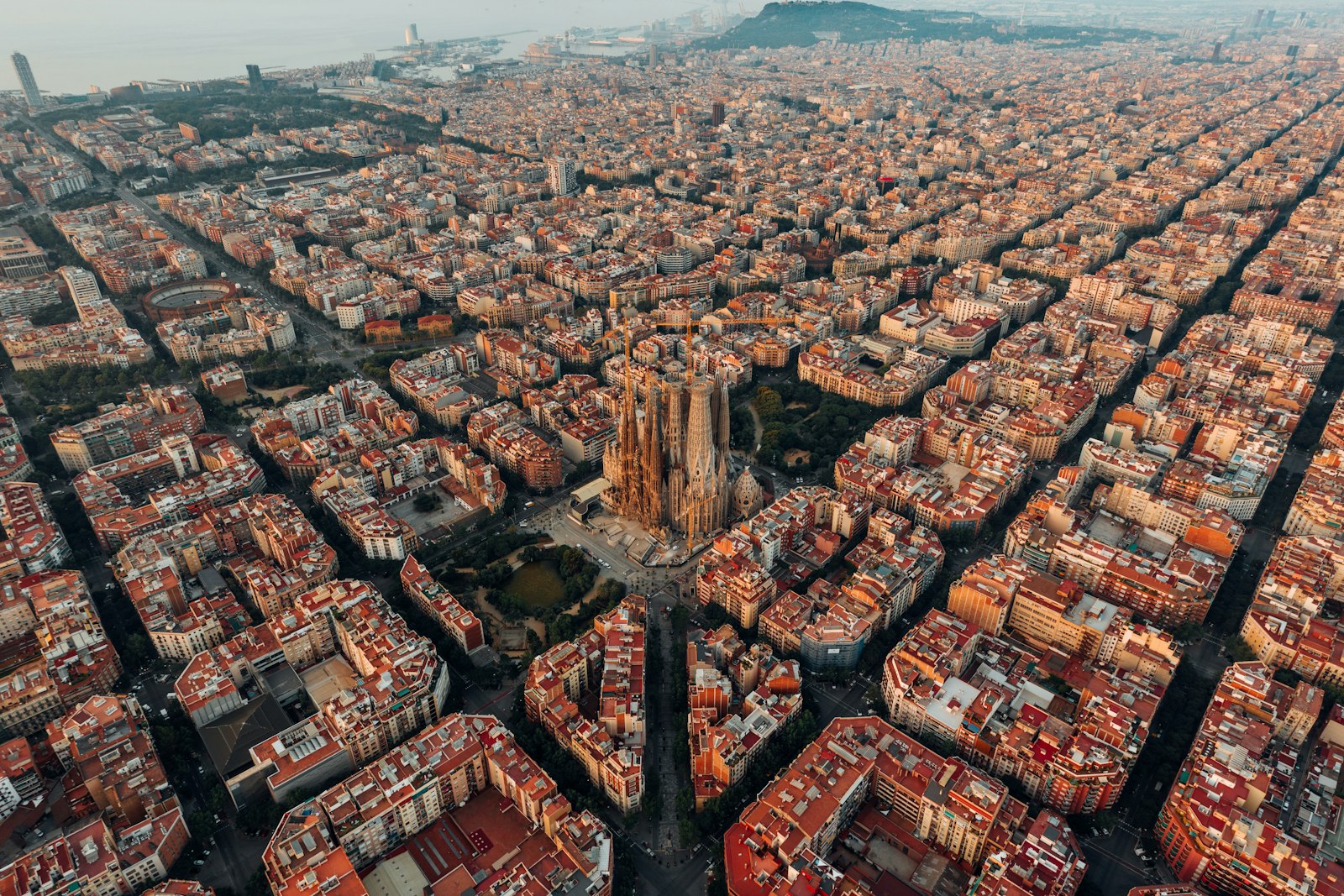
Barcelona has mastered the good-looking hotel.
The city has become extremely good at making hospitality look correct: tiled floors, restored façades, soft lighting, local references, rooftop cocktails, a restaurant that understands the difference between Catalan and generic Mediterranean. None of that is enough anymore.
The harder question is whether a new hotel can still make Barcelona feel specific.
Hotel Club 29 will test that question when it opens in September 2026 on Passeig de Gràcia, one of the city’s most exposed and symbolically loaded avenues. Hidden Hotels has revealed the concept for the five-star boutique property, which will occupy a historic 1897 building at number 29 and offer 65 rooms, a restaurant, cocktail bar, terrace and interior patios.
That already gives the hotel a problem. Passeig de Gràcia is not a neutral address. It is a stage.
Why the name matters
Hotel Club 29 is not a random name.
Hosteltur reports that the name refers both to the hotel’s address, number 29, and to the historical identity of Passeig de Gràcia as street number 29 during the development of the Eixample. The concept also draws from Barcelona around 1929, a period of urban growth, architecture, art and cultural transformation.
That is a strong idea if handled carefully. A hotel inspired by 1929 Barcelona could become pastiche very quickly: too much Deco, too much bourgeois fantasy, too much theatrical nostalgia. The better route is subtler. It should feel like the private life of the avenue rather than its public postcard.
The façades are famous, but the real luxury is often in patios, galleries, staircases, private rooms and the places where the city turns inward.
Barcelona’s best hotels understand that the city is both exterior and interior. Hotel Club 29 seems to be built around exactly that tension.
The private-club language
The project has been described as inspired by private clubs and the domestic life of Barcelona’s late-1920s bourgeoisie, with common areas conceived as places for guests and visitors to meet rather than simply pass through.
This is useful because many Barcelona hotels have become too transactional. Guests arrive, sleep, go to restaurants elsewhere, take the rooftop photo, leave. A hotel with true club logic should do something different. It should create a reason to stay inside without disconnecting from the city. A cocktail bar that locals might use. A restaurant with its own audience. Interior patios that do not feel like leftover space. A lobby that is not only a reception desk wearing expensive furniture.
If Hotel Club 29 gets this right, it can become more than another luxury room on Passeig de Gràcia. It can become an address, the same bet Il Capri is making on its island this season.
The suite signal
The most revealing detail is the top accommodation.
Hosteltur reports that the Presidential Suite will include sitting areas, two bathrooms, a freestanding bathtub, private dining room, outdoor terrace and solarium, with the possibility of connecting to an adjoining room and being sold together as a Royal Suite.
That tells us the target. Not only couples on a Barcelona weekend. Families. Principals with staff. Long-stay guests. People who want the city but require domestic space. Travellers who do not want to feel exposed every time they move through the hotel.
Luxury in Barcelona is becoming more residential. That makes sense. The city is no longer a place where top guests are satisfied with a beautiful room and a good breakfast. They want privacy, control, culture, food and access without feeling like part of the tourist pressure the city itself is trying to manage.
Why Hidden Hotels is credible here
Hidden Hotels has built its identity around historic buildings and destination-specific narratives, including Gran Hotel Inglés in Madrid and Seda Club Hotel in Granada. Hosteltur frames Hotel Club 29 as a continuation of that model in Barcelona.
That matters. Barcelona does not reward generic luxury. It is too architecturally strong, too politically sensitive, too exposed to tourism debates and too proud of its own identity. A hotel that arrives with a copy-paste international mood can look expensive and still feel wrong.
The advantage of Hotel Club 29 is that it begins with the building, the avenue and a period of the city’s own history. The risk is that the concept becomes too polished. Barcelona does not need a museum of bourgeois elegance. It needs a living hotel.
Who should watch it
Hotel Club 29 is for travellers who want Barcelona from the inside of the Eixample, not from the beach or the Gothic Quarter.
It should suit visitors who care about architecture, shopping, restaurants, design, private spaces and the city’s more adult social rhythm. It may also work for Americans who want a central luxury address but do not want the anonymous international-hotel feeling.
It is not for someone looking for a resort stay. It is not for someone who wants Barcelona only as nightlife. This is an urban hotel. It should behave like one.
Luxury.it perspective
Hotel Club 29 matters because Barcelona luxury is entering a more nuanced phase. The city has spectacle covered. What it needs are hotels that can make central Barcelona feel intimate again. A historic building on Passeig de Gràcia, a private-club idea, patios, terrace, cocktail bar and a 1929 cultural reference could become too much if mishandled. But if the restraint is there, Hotel Club 29 may give Barcelona something valuable: a hotel that knows the avenue is public, but the best part of the stay should feel private. That is the Barcelona luxury test now.
Related guides
Gran Hotel Claridge Granada · Casa METT Sitges · Il Capri · Luxury Openings
Watching Barcelona’s next luxury chapter from the Eixample inward? Request access through Luxury.it Concierge.