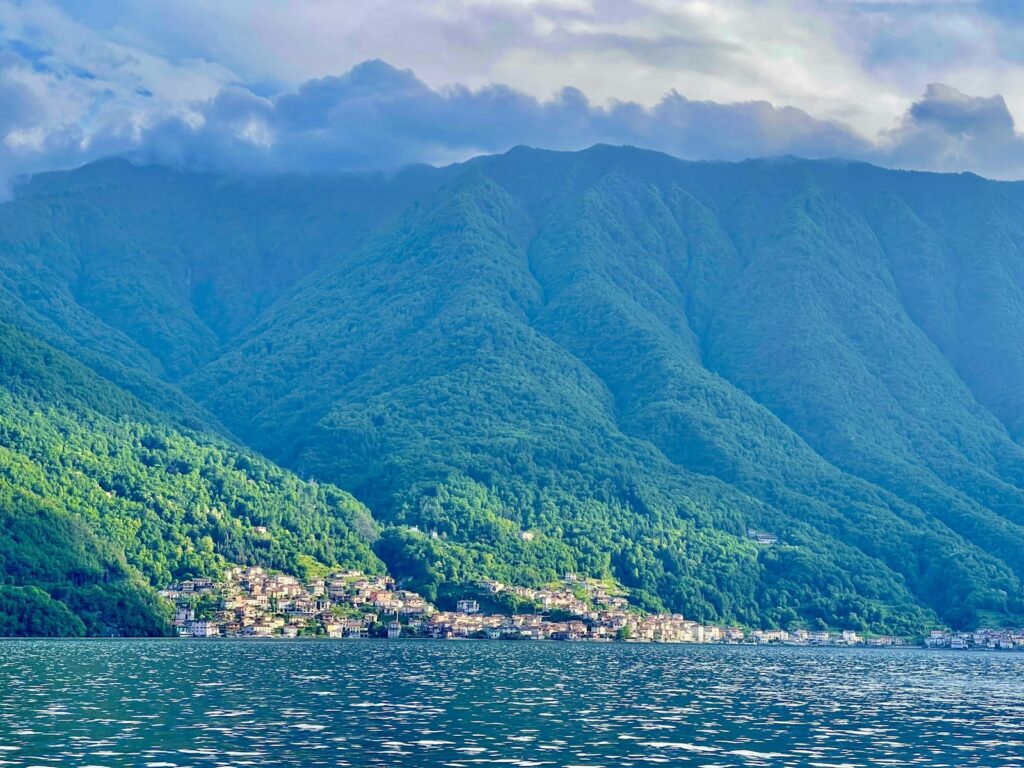
At first light, Costa Smeralda is granite, juniper and water. By dinner, it has become a system of tenders, terraces, villas and names. The art is not gaining access to all of it. It is choosing the version that belongs to you.
Costa Smeralda luxury is easy to purchase and surprisingly easy to misuse. A suite at Cala di Volpe, dinner in Porto Rotondo, sunset at Phi Beach and a boat waiting in Poltu Quatu may each be excellent decisions. Put them on the same day, however, and you have designed a transfer schedule instead of a holiday.
This coast rewards precision more than abundance. The right base removes half the logistics. The right boat turns distance into pleasure. Three intelligently chosen restaurants say more about the destination than seven fashionable reservations. A hotel can be a stage, a refuge or simply the most efficient place from which to reach the water; trouble begins when it is booked for the wrong role.
This is the Luxury.it pillar guide to the Costa Smeralda at the top end: not a directory of everything expensive in north-eastern Sardinia, but a framework for choosing where to stay, whether to take a villa, how to use a yacht, which tables deserve the evening and when the coast is at its best.
Last verified: 9 September 2026. Seasonal hotels, restaurants, beach clubs and marina arrangements can change; use the linked specialist guides for the latest operating details.
The Costa Smeralda brief in 60 seconds
| The priority | The strongest starting point |
|---|---|
| The original Costa Smeralda mythology | Cala di Volpe |
| Privacy, villas and a low public profile | Pitrizza or a fully staffed house around Liscia di Vacca |
| Beach-led family time | Romazzino |
| Restaurants, marina life and evenings on foot | Central Porto Cervo |
| A younger, more contemporary marina scene | W Sardinia at Poltu Quatu |
| Sunset, space and resort control | 7Pines Resort Sardinia |
| An inland retreat with serious food | Petra Segreta above San Pantaleo |
| The most balanced months | June and September |
| The stay length that begins to make sense | Five nights; seven if the sea is central to the trip |
The essential principle is geographic. Porto Cervo, Cala di Volpe, Pitrizza, Poltu Quatu, Baja Sardinia, San Pantaleo and Porto Rotondo belong to the same high-end summer orbit, but they do not create the same day. In July and August, what looks close on a map can become the difference between an effortless dinner and an hour spent watching the taillights ahead.
What Costa Smeralda actually is: an authored coastline
Costa Smeralda is often used as loose shorthand for the whole of north-eastern Sardinia. The original idea is more exact. The Consorzio Costa Smeralda was created in 1962 to guide the development of a defined, non-contiguous territory across Arzachena and Olbia. Porto Cervo became its social and nautical centre, while Cala di Volpe, Pevero, Romazzino, Liscia di Vacca and Pitrizza formed the sequence of coves, hotels and houses that established the name internationally.
That distinction still matters. Porto Rotondo is a neighbouring resort with its own founders, marina and culture; it is better understood as Porto Cervo’s elegant rival than as one of its districts. San Pantaleo belongs to the inland life of the wider destination. Poltu Quatu and Baja Sardinia extend the practical yachting and hospitality map northwards. A sophisticated itinerary can use all of them without pretending they are interchangeable.
The coast was not developed through a row of generic seafront hotels. Prince Karim Aga Khan IV assembled architects and planners who created a visual language from granite, white lime, terracotta, juniper, curved walls and irregular spaces. Luigi Vietti shaped Porto Cervo; Jacques Couëlle treated Cala di Volpe as inhabitable sculpture; Michele Busiri Vici gave the coast the church of Stella Maris. Pitrizza is credited to that same school, without one signature attached. Their work borrowed from Sardinian rural buildings and the wider Mediterranean without reproducing one historic village literally.
Porto Cervo is therefore an invention, but invented and false are different words. Porto Cervo is a total design project whose best buildings were made to recede into rock, vegetation and light. The original hotels remain important for a reason beyond the price of a room. They are physical documents of the idea that made the coast valuable.
Costa Smeralda is at its most convincing when architecture, landscape and service appear to agree on how visible they should be.
Where to stay: six distinct versions of the coast
The most expensive mistake in Costa Smeralda is choosing a hotel before deciding how the days need to feel. The coast does not have one centre of gravity. It has several, and each produces a different balance of privacy, beach access, dining, boating and social exposure.
| Base | What it feels like | Best for | The compromise |
|---|---|---|---|
| Porto Cervo | Marina, Piazzetta, restaurants, boutiques and the coast’s most legible social theatre | First-time visitors who want evenings to happen around them; short stays; yacht owners using the marina | Less retreat, more visibility, and peak-season traffic whenever the day leaves the village |
| Cala di Volpe, Pevero and Romazzino | The original resort coast: bays, grand hotels, beach rituals and the old mythology | Couples and families who want the hotel to carry much of the stay | Dinner in Porto Cervo is a transfer, not a walk; the most famous addresses are deliberately public |
| Liscia di Vacca and Pitrizza | Quieter, villa-led and naturally connected to the water | Privacy, larger parties, repeat visitors and guests who prefer the tender to the lobby | Less spontaneous street life; the quality of the house team or hotel service becomes decisive |
| Poltu Quatu and Baja Sardinia | A marina village, contemporary hotels, sunsets and a younger rhythm | Friends travelling together, design-conscious guests and easy access towards La Maddalena | Not the historic Porto Cervo experience; some evenings still require a driver south |
| San Pantaleo and the hills | Granite, stazzi, studios, gardens and a useful distance from the coast’s performance | Food, privacy, longer stays and travellers who do not need to wake directly beside the sea | Every beach or boat departure requires planning; the pleasure lies in retreat, not convenience |
| Porto Rotondo | A separate marina society with a more residential, often quieter character | Villa stays, families and guests whose restaurants and boats are based east of Olbia | Combining it casually with a Porto Cervo-heavy schedule in peak weeks does not work |
For most first visits, one of three answers is correct. Choose Porto Cervo when restaurants, the marina and social proximity matter most. Choose Cala di Volpe or Romazzino when the hotel and beach need to be one continuous world. Choose Pitrizza or a staffed villa when privacy is the principal form of luxury.
Poltu Quatu, Baja Sardinia and San Pantaleo become more persuasive on a second visit, or for travellers whose taste is already clear. Porto Rotondo works beautifully when treated as its own base; it works badly when booked as an inexpensive-looking substitute for Porto Cervo while every reservation remains on the other side of the summer traffic.
The hotels that define the destination
Our complete guide to the best hotels in Costa Smeralda compares the leading addresses in detail. At pillar level, the useful distinction is not a conventional ranking. It is what each hotel allows the guest to stop organising.
Hotel Cala di Volpe: the original stage
Cala di Volpe is the hotel for travellers who want the mythology rather than a discreet approximation of it. Jacques Couëlle’s architecture, the bay, the broad saltwater pool, the long lunches and the parade of seasonal collaborations all make the property part resort and part public theatre. Marriott currently lists 121 rooms; the scale is substantial enough for the hotel to create its own social climate.
Book it because the house itself is part of the trip. Do not book it while hoping it will behave like an anonymous private villa. Cala di Volpe is glamorous precisely because it knows that people are looking.
Hotel Pitrizza: withdrawal as a service
Pitrizza is the opposite answer. The official inventory currently comprises 49 rooms and suites plus 16 villas, most of the latter with private pools. The buildings settle into the granite and vegetation with unusual restraint, while the sea, private beach and rock-cut saltwater pool keep the day close to the property.
Its value has little to do with isolation, since Porto Cervo is minutes away. What it sells is control over how often you enter the scene. This is the hotel for guests who want Costa Smeralda access without making public visibility the organising principle of the stay.
Romazzino, A Belmond Hotel: the beach-resort ideal
Romazzino is the cleanest answer for families and couples who want the beach to carry the week. Belmond lists 94 rooms and suites, six independent villas with pools, a private beach, seawater and freshwater pools, an open-air gym and a children’s club. Michele Busiri Vici’s white, curving architecture gives the hotel a softer presence than Cala di Volpe.
The essential difference is emotional. Cala di Volpe is a stage. Romazzino is a retreat that still understands glamour. It asks less from the guest and gives the sea more room to dominate.
Hotel Cervo: Porto Cervo outside the bedroom door
At Hotel Cervo, the room is not the entire argument. The location is. Staying in the centre allows dinner, a drink in the Piazzetta and a return to the hotel without turning every evening into a chauffeur movement. For a short, restaurant-led stay, that convenience can outweigh the larger grounds or private beach of an outlying resort.
It is also the easiest base for someone arriving with a yacht in the marina but wanting a room on land. Take it for access and atmosphere. Take one of the bay hotels when the property itself must be the view.
W Sardinia – Poltu Quatu: the new social language
W Sardinia at Poltu Quatu represents a different generation of the coast: design, music, a marina setting and a more openly contemporary rhythm. It does not attempt to imitate the old Aga Khan hotels. That is its strongest decision.
It suits friends, younger couples and travellers who want a recognisable international lifestyle hotel inside a village with strong nautical access. It is less convincing for anyone seeking the soft-focus nostalgia of Cala di Volpe, and much more convincing for those who find that nostalgia slightly embalmed.
7Pines Resort Sardinia: sunset and room to exhale
Near Baja Sardinia, 7Pines runs 75 suites and rooms above its own coves, with a spa, family facilities and one of the coast’s strongest sunset positions. Its geography makes La Maddalena and the northern sailing routes feel natural, while Cone Club creates a controlled transition from afternoon to evening without requiring another change of venue.
Use it when the group needs a complete resort but does not want every night to gravitate towards Porto Cervo. The distance from the historic centre is a feature when properly understood and a frustration when ignored.
Petra Segreta: the inland counterpoint
Petra Segreta sits in the hills above San Pantaleo instead of on the beach. Its 27 rooms and suites include ten with private heated pools, and Il Fuoco Sacro holds a Michelin star in the 2026 guide. The scale, stone buildings, gardens and distance from the waterfront create a version of Costa Smeralda in which food and retreat matter more than arriving in swimwear.
It is particularly strong for the second half of a split stay: several nights on the coast followed by quiet in the hills. It can also be the right answer for travellers who understand that seeing the sea from a terrace is not the same desire as spending every hour beside it.
Hotel, villa or serviced residence?
The choice of accommodation format changes the social structure of the trip. A hotel provides an existing rhythm. A villa allows the party to invent one. A serviced residence sits between them, with domestic space and at least part of a hotel operation behind it.
A hotel, while the destination is still unfamiliar
For a first visit, a hotel usually buys more than a room. It buys a beach position, breakfast without decisions, an informed concierge, a tender desk, restaurant access, housekeeping, children’s arrangements and a team capable of correcting the day when weather or traffic changes it.
The great Costa Smeralda hotels are also historical objects. Staying at Cala di Volpe, Pitrizza or Romazzino offers access to the architecture and ritual that made the coast famous. That has value beyond square metres.
A villa, once privacy comes with an operation behind it
A private house makes sense for a multigenerational family, several couples, guests travelling with staff, long stays or anyone who wants lunch, swimming and conversation to happen away from other hotel residents. The villa itself, however, is only half the product.
Before comparing rates, establish what is actually included: a resident or daily house manager, housekeeping hours, chef and service staff, provisioning, laundry, driver stand-by, security, children’s equipment, gym or treatment access, beach arrangements and the logistics between the house and the boat. A beautiful property without an excellent team is simply real estate with towels.
Our private villa guide for Italy explains the service questions that matter before a deposit is paid. In Costa Smeralda, the strongest houses are usually secured through relationships instead of an open booking calendar, particularly in August.
A serviced residence, for space with hotel life still attached
The residential-hospitality category is growing. La Tiara di Cervo offers larger suite layouts above Porto Cervo with a private-home logic. At Poltu Quatu, W Residences Sardinia points towards branded homes supported by the hotel operation next door.
This format suits families who need bedrooms and living space but do not want to recruit an entire villa team. The crucial distinction is between a residence with genuine daily service and an apartment using luxury language. Ask exactly which hotel facilities, housekeeping, food delivery, concierge and transport services attach to the unit being offered.
Why the water is the real infrastructure
Without a boat, it is possible to have an excellent Costa Smeralda holiday. With one, the geography begins to make sense. The yacht is not merely a status object here; it is the most elegant transport layer between coves, hotels, restaurants and the La Maddalena Archipelago.
Marina di Porto Cervo is built for that traffic. IGY lists 700 berths, including 100 megayacht berths, with capacity for vessels up to 160 metres. The New Marina operates year-round with 24-hour VHF service, while the Old Port is officially seasonal from June through September. Advanced reservations are strongly recommended, and a berth should never be treated as an incidental detail of an August arrival.
The Yacht Club Costa Smeralda, founded in 1967, gives the coast a sporting relationship with yachting instead of a decorative one. Its regattas bring owners, crews and designers into Porto Cervo for weeks when the marina has a different energy from the celebrity-heavy high season. For sailors, those dates may be the reason to travel; for hotel guests, they affect rooms, berths and restaurants even when no one in the party is racing.
A day yacht and a charter week solve different problems
A day boat is ideal for reaching La Maddalena and Caprera, swimming away from the main beaches, moving between a hotel and a waterfront lunch, or giving a family a full sea day without changing accommodation. Select it for shade, stability, swim access, crew and realistic range. How the profile looks in the marina decides nothing.
A week-long charter becomes a separate holiday altogether. The coast can become the first and final chapter of a route through the archipelago and, when weather and formalities allow, southern Corsica. This is where our Italy yacht charter guide becomes more useful than a hotel concierge’s list of day boats.
In either case, let the captain lead on wind and anchoring. The Mistral can redraw the most beautiful plan, and protected waters carry rules that a serious crew will observe without drama. Insisting on a famous cove in the wrong conditions is not exclusivity. It is poor seamanship with a photographer attached.
The most luxurious boat day is not always the longest
Six well-run hours can be more satisfying than leaving at breakfast and returning after dark. The strongest days usually have one clear axis: a long swim and lunch; the islands and a quiet anchorage; or a direct transfer to a restaurant followed by a slow return. Trying to combine every photogenic beach turns the sea into a checklist.
The test is simple. A boat removes logistics from a holiday. When it creates an early alarm, a rushed lunch and four compulsory stops, the itinerary has mistaken movement for access.
How to build the dining calendar
Costa Smeralda has more famous restaurant names than any sensible week can absorb. A logo is not a reason to reserve a table. The purpose of a dining calendar is contrast: one waterfront statement, one technically serious dinner, one meal that speaks clearly of Sardinia and one evening allowed to remain easy.
Our current guides cover the best restaurants in Porto Cervo, the wider Costa Smeralda dining map and, for guests based east of Olbia, the best restaurants in Porto Rotondo. Use those pages for live menus, seasonal service and direct booking details. Use the framework below to decide what belongs in the week at all.
1. The arrival dinner: water or Piazzetta
Langosteria Porto Cervo is the defining water-led opening of 2026, with its Porto Vecchio terraces and tender access. It works when the first night has to announce the coast immediately: seafood, boats, darkening water and an evening with a clear sense of occasion.
Paper Moon Porto Cervo answers a different brief. Its position in the Piazzetta and polished Italian identity suit a first evening that wants to feel composed instead of theatrical. One is arrival by water; the other is an elegant walk through the centre. Booking both for adjacent nights would be reasonable. Treating them as versions of the same restaurant would not.
2. The dinner that belongs to the kitchen
For technical fine dining, ConFusion in Porto Cervo and Il Fuoco Sacro at Petra Segreta offer two contrasting routes. ConFusion, which holds a Michelin star for the eighth consecutive year in the 2026 guide, is high-gloss and central, designed for a full tasting-menu evening inside the Porto Cervo machine. Il Fuoco Sacro asks for a drive into the hills and rewards it with a more secluded setting.
This should be the night with no ambitious plan afterwards. A tasting menu followed by another reservation is not a full evening; it is a failure to choose.
3. The modern Sardinian table
Frades La Terrazza, above Cala di Volpe at Abbiadori, is the long-standing answer to the request for Sardinian food without costume, and its season dates are worth confirming by phone. Bottarga, pane lentu, local cheeses, cured meats and island produce appear in a contemporary language, while the view over Cala di Volpe gives the meal sufficient ceremony.
The aim here has nothing to do with banning international restaurants from the week. It is to keep the destination from shrinking to a set of brands that could be moved intact to Dubai, Mykonos or Miami.
4. The reset
After several polished rooms, a good agriturismo in inland Gallura can become the meal everyone remembers. It changes the tempo: fixed courses, family recipes, roast meats, pasta, cheese and a table that does not need to become a scene. This is not “authenticity” staged as entertainment. It is the necessary correction to a coast that can otherwise grow too self-referential.
For a seven-night stay, three anchor reservations are enough. Add one long hotel or beach lunch, one countryside meal and two evenings with room to decide late. Luxury dining becomes tiring when every night is forced to justify the trip.
Beach clubs by the kind of day you want
The best beach club in Costa Smeralda is not a universal address. It is a timing decision. Our full Costa Smeralda beach-club guide ranks the leading options by use rather than by fame.
Nikki Beach Costa Smeralda is for the international yacht-day scene: music, cabanas, a recognisable crowd and arrival by private boat or dedicated shuttle. It is not pretending to be an undiscovered Sardinian beach, and it is the wrong booking for anyone seeking one.
A Mare and White Beach Club make more sense when Liscia Ruja and lunch are the centre of the day. The first brings a more designed restaurant identity; the second keeps the beach itself closer to the foreground.
Phi Beach should be understood from late afternoon onwards. Its rock setting and sunset are the event, followed by dinner and music. Treating it as a conventional morning beach club misses its strongest hours.
Cone Club at 7Pines offers sunset and dining within a resort-controlled environment, particularly useful for guests staying around Baja Sardinia or Poltu Quatu. Romazzino Beach Club represents the classic hotel version: managed, polished and integrated with the property instead of built as an independent party destination.
Leave one day with no beach club at all. Take the hotel’s quietest stretch of sand, use the villa pool, or let the captain find a protected anchorage. Paying for access is not the same thing as improving every day.
Architecture, design and the original idea
It is easy to miss the buildings because the yachts are larger. That is a mistake. Costa Smeralda became a luxury destination through design before it became a retail circuit.
Porto Cervo’s alleys, irregular piazzas, arches and framed views were composed to seem discovered rather than planned. The theatrical quality is intentional. Luigi Vietti created a Mediterranean collage in which stairs slow the body, corners withhold the view and small openings reveal the water in fragments. The architecture does not dominate through scale; it directs movement.
Stella Maris, designed by Michele Busiri Vici, is the clearest small building through which to understand the style. Its white curves, granite supports and restrained position above the harbour turn Sardinian rural references into modern sacred architecture. It is not an excursion added to the holiday. It is an explanation of why the rest of Porto Cervo looks the way it does.
At Cala di Volpe, Jacques Couëlle rejected the straight-line logic of an international resort. The hotel behaves like a fictional fishing village sculpted into the bay, with rough surfaces, irregular volumes, coloured ceramics and a sequence of spaces that becomes more legible slowly. At Pitrizza the opposite route was taken: granite, terracotta and vegetation make the buildings recede almost completely.
The most rewarding design day does not require a shopping list. Look at the hotels before their public rooms fill; walk Porto Cervo with attention to chimneys, thresholds and stone; then go inland towards San Pantaleo, where the coast’s decorative language becomes ceramics, textiles, furniture, gardens and houses instead of another row of global boutiques.
For collectors, the distinction between an object made in Gallura and a luxury product merely sold there is worth preserving. Costa Smeralda has always absorbed international glamour. Its identity survives through the things that could not have been made anywhere else.
The best time to visit Costa Smeralda
There is no single best month. There is a month that matches the trip. The full destination is highly seasonal, and the difference goes well beyond temperature and price. It is which version of the social and hospitality machine is running.
| Period | What it offers | What to verify |
|---|---|---|
| Late May and June | Long light, cleaner roads, gardens in better condition and enough energy without complete compression | Some beach clubs and seasonal restaurants may still be opening progressively |
| Early July | The coast is fully awake, yachts are arriving and most of the season’s dining programme is operating | Rates and reservations are already serious; secure the key nights before arrival |
| Late July and August | The complete social spectacle: largest yachts, fashion activations, private events and the highest concentration of international guests | Rooms, villas, berths, chefs, drivers and tables become allocations instead of casual bookings |
| September | Warm sea, a softer rhythm, sailing events and more space around the same landscape | Closing dates differ sharply; never assume every summer venue remains open all month |
| October | Silence, walking, some resort wellness and a very different relationship with the land | This is no longer the complete Costa Smeralda product; many social and dining addresses will have closed |
June is the strongest all-round answer for families, couples and first-time visitors who want the coast functioning without its maximum pressure. September is often better for repeat guests, sailors and anyone who values the sea more than the scene. August is correct only when the concentration of people, boats and events is itself part of the reason to come.
The mistake is paying August prices while wanting September quiet. The opposite error also occurs: arriving in late May expecting every seasonal restaurant, beach club and event to operate as though it were the first week of August. Costa Smeralda is not a year-round city by the sea. Its season has an opening movement, a crescendo and an exit.
The rhythm of a well-run week
A luxury itinerary should create negative space. Seven days do not need seven set pieces. A well-run Costa Smeralda week usually contains the following elements, arranged around weather and appetite instead of a rigid daily script.
- Two days on the water, separated by land. Use one for La Maddalena and Caprera, the other for a shorter coastal day, swimming and lunch. Consecutive full boat days can feel repetitive, particularly with children or guests who do not live on the water.
- One day that belongs entirely to the hotel or villa. No driver, no social obligation, no distant lunch. The best accommodation on the coast is expensive partly because it can carry a complete day; allow it to do so.
- Three anchor dinners. One waterfront or Piazzetta statement, one kitchen-led evening and one Sardinian table. Leave the rest flexible enough for fatigue, weather or a recommendation picked up after arrival.
- One inland movement. San Pantaleo, Petra Segreta, a winery or a properly chosen agriturismo interrupts the visual repetition of sea, marina and white linen. It also explains the Gallura behind the resort.
- One empty half-day. It may become a spa appointment, a second swim, an unplanned lunch, time in the room or nothing at all. Call it the buffer that keeps the rest of the week from becoming work.
For five nights, remove one boat day and keep the empty space. For ten nights, consider splitting the stay between a beach hotel and the hills, or between Costa Smeralda and a charter. Length is there to create range, and never to add obligations.
Private aviation, chauffeurs and yacht arrival
Olbia is the natural air gateway. Scheduled passengers use Olbia Costa Smeralda Airport; business aviation is handled through the General Aviation Terminal, where Eccelsa Aviation provides FBO, ground-handling and concierge services. The importance of Olbia is not only proximity. It was developed alongside the destination and remains part of the coast’s operating logic.
For private arrivals, plan the handover between aircraft, luggage, staff, car and villa as one movement. The model of vehicle matters less than whether it is waiting in the correct place, has room for the party and baggage, and is connected to the house manager or hotel team before landing.
A dedicated chauffeur is usually more useful than a rented supercar. The roads are scenic but narrow in places, parking can become the least elegant part of dinner, and the person driving cannot fully participate in long lunches or tastings. Guests staying centrally at Hotel Cervo may walk to several evenings; almost everyone else benefits from a car operation that understands the geography.
Yacht arrivals require the same precision. Confirm the berth, shore-power requirements, tender arrangements, customs formalities where applicable, transfers for guests and crew needs before the vessel reaches the marina. A restaurant pontoon is not a substitute for a confirmed overnight berth.
Whether arriving by jet or yacht, the principle is identical: luxury is not the visible vehicle. It is the absence of a visible handover.
The next Costa Smeralda: hotels become residences, and the old icons change hands
The 2026 season has made clear that Costa Smeralda is entering another development cycle. W Sardinia has brought a new international lifestyle brand to Poltu Quatu. La Tiara di Cervo has strengthened the serviced-residence format above Porto Cervo. W Residences is preparing a more explicit bridge between hotel services and coastal ownership.
The older hierarchy is evolving as well. Smeralda Holding and LVMH Hospitality Excellence announced in February 2023 that Belmond would take Romazzino and Cheval Blanc would take Pitrizza, with the rebrand set for 2026. That date has passed. Cheval Blanc’s European sales director told the trade press in March 2026 that the transformation runs three years and reopens in May 2027, and the group’s own site still lists no Sardinian address. Treat May 2027 as the current indication and not as a published opening. What matters more than the flag is the inheritance: Cheval Blanc takes on one of the coast’s original architectural ideas, its villa privacy and its granite relationship with the site. How much of that character survives the polish is the whole question.
Rocco Forte’s Costa Smeralda resort is officially scheduled for 2027, with 64 rooms and suites, interiors by Patricia Urquiola, landscaped gardens, three restaurants and a rooftop bar on a seafront site north of Porto Cervo. It adds another operator with a strong Italian hospitality identity rather than another anonymous global resort.
Mandarin Oriental has also announced a Costa Smeralda project overlooking the Gulf of Pevero, planned around 83 rooms and suites, multiple restaurants, a spa and access to a private beach. The date published when the project was announced was mid-2026. It has passed without an opening and without a new one being issued, so an open reservation line is the point at which this becomes real.
The next phase of the coast will therefore be less monolithic than the last. Historic hotels are being reinterpreted, international brands are arriving, residences are offering longer-term control and villas remain the scarce private currency. More supply does not automatically mean more access at the highest level. It means the guest must become more exact about which form of access matters.
Frequently asked questions
Where exactly is Costa Smeralda?
The original Costa Smeralda is a defined resort territory in north-eastern Sardinia centred on Porto Cervo and including areas such as Cala di Volpe, Pevero, Romazzino, Liscia di Vacca and Pitrizza. In travel language, the name is often extended to nearby San Pantaleo, Poltu Quatu, Baja Sardinia and even Porto Rotondo. This guide treats those places as part of the wider luxury orbit while preserving their different identities.
Which area is best for a first visit?
Porto Cervo for restaurants, marina life and evenings on foot. Cala di Volpe or Romazzino for the classic hotel-and-beach week. Pitrizza for privacy. A first visit becomes easier when the hotel already delivers the version of the coast you came to see.
Is Porto Cervo or Porto Rotondo better?
Porto Cervo is the historic social and yachting centre of Costa Smeralda, with the greatest concentration of iconic hotels, international restaurants and major yachts. Porto Rotondo is a separate resort with a more residential marina culture and its own dining scene. Neither is universally better. What goes wrong is staying in one while booking every important evening in the other during peak season.
What is the best luxury hotel in Costa Smeralda?
Cala di Volpe is the definitive choice for mythology and social theatre. Pitrizza is stronger for privacy and villas. Romazzino is the most complete beach-resort answer for many families. Hotel Cervo is best for central Porto Cervo. W Sardinia and 7Pines offer more contemporary alternatives. The correct hotel depends on the role it needs to play.
Do you need a yacht in Costa Smeralda?
No, but at least one properly crewed boat day materially improves a first stay. The sea connects the coast more naturally than the road and opens La Maddalena, Caprera and quieter anchorages. A day yacht is enough for many visitors; a multi-day charter becomes a separate holiday.
What is the best month to visit?
June offers the strongest overall balance of operating hotels, long days and manageable pressure. September has warm water, sailing energy and more space, although seasonal closing dates need attention. August is right for travellers who actively want the full social spectacle and are prepared to secure inventory well in advance.
How many nights should you spend in Costa Smeralda?
Five nights is a meaningful minimum. Seven allows two boat days, time to enjoy the hotel or villa, three serious dinners and one inland movement without compressing the week. Longer stays work best when split between different bases or combined with a yacht charter.
Should a family book a hotel or villa?
A hotel is simpler for a first stay, especially when beach access, children’s facilities and a concierge are important. A staffed villa becomes stronger for several generations, multiple bedrooms, privacy and longer stays. Compare the service operation, not the building alone.
Can you experience Costa Smeralda without a car?
Only partially. Central Porto Cervo allows several evenings on foot, and a yacht can handle much of the coastal movement. Most hotels, villas, beaches and inland restaurants still require a chauffeur or car. A well-planned driver is one of the most useful reservations of the trip.
Luxury.it perspective
Costa Smeralda is often mistaken for an exercise in maximalism: the largest yacht, the most visible table, the newest villa, the room everyone recognises. Its highest form is more controlled.
One right hotel. A house team that never needs to be chased. Two days at sea that follow the weather. Three tables chosen for contrast rather than logos. Enough empty time for the coastline to stop looking like a backdrop.
The coast was designed around intervals: granite against white walls, hotel against water, public theatre against private retreat. A serious trip preserves them. That is the difference between visiting Costa Smeralda and merely assembling expensive things inside it.
For a hotel, villa and yacht shortlist built around your dates, party and preferred level of visibility, contact the Luxury.it Concierge.